Can Nature-Based Solutions Solve Our Wastewater Treatment Challenges—While Capturing Carbon?
As Canada’s wastewater systems strain under aging infrastructure, tighter regulations, and the rise of persistent contaminants, Francis Allard argues that discharge-based treatment models are reaching their limits. He contends that willow-based, zero-liquid-discharge phytotechnologies offer a fundamentally different paradigm: containing effluents on-site through evapotranspiration rather than transferring risk downstream. Framing landfill leachate trucking as both financially unsustainable and environmentally contradictory, Allard makes the case that nature-based solutions can simultaneously reduce long-term liability, manage emerging contaminants such as PFAS, and capture carbon—provided regulatory systems evolve to recognize containment, not discharge, as the benchmark of environmental protection.
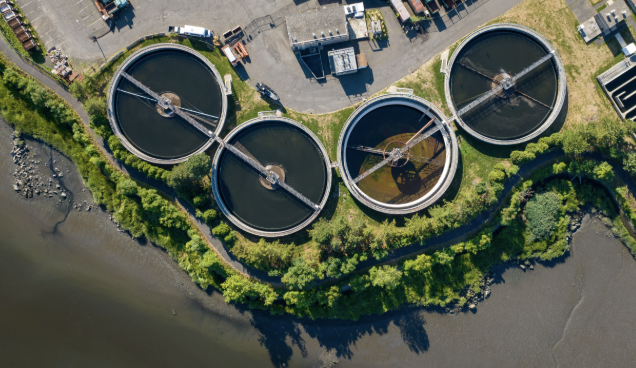
Canada’s wastewater infrastructure is under growing strain. Aging treatment plants, tightening regulations, climate-driven variability in flows, and the emergence of persistent contaminants are converging into a systemic challenge. While these pressures are evident across municipal systems, they are particularly acute in landfill leachate management.
In fact, many landfill sites do not have on-site treatment systems at all. Others rely on infrastructure that was designed decades ago and is no longer sized for current volumes or regulatory expectations. When capacity is exceeded—or absent altogether—operators are often left with a costly and carbon-intensive fallback: trucking leachate to off-site treatment facilities.
This reality exposes fundamental limits in how wastewater treatment has been planned and regulated, and for Ramo it raises an important question: could nature-based solutions (NBS) address wastewater treatment challenges while simultaneously reducing greenhouse gas emissions and long-term environmental risk?
Trucking leachate: an unsustainable status quo
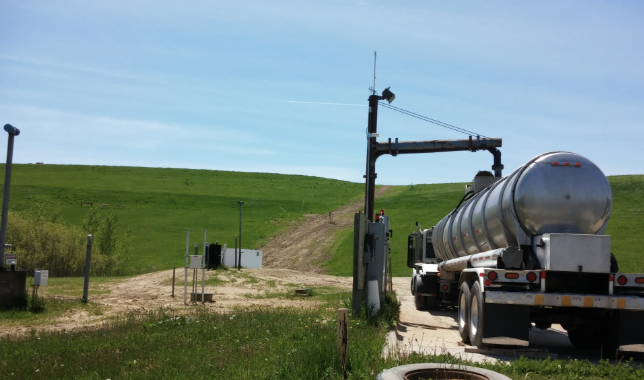
Landfill leachate generation can reach tens of thousands of cubic metres per site each year, depending on climate, waste composition, and landfill design. For sites without treatment infrastructure, trucking becomes the default solution from day one. For others, it becomes unavoidable once on-site systems reach hydraulic or treatment limits.
The financial implications are significant. Hauling costs can quickly climb into the hundreds of thousands—or millions—of dollars annually, with no improvement to on-site resilience or capacity. These costs are recurring, exposed to fuel price volatility, and difficult to predict over the long term.
The environmental contradiction is equally clear. Continuous trucking generates substantial greenhouse gas emissions while simply transferring contaminated wastewater or leachate from one location to another. Importantly, trucking does not eliminate environmental risk—it relocates it. The reality is that the relocation often results in an incomplete treatment and avoidable discharge of contaminants into sensitive surface waters.
The limits of discharge-based infrastructure
Canada’s wastewater treatment infrastructure has largely been built around a single organizing principle: treat wastewater to defined limits and discharge it to the environment. Regulatory frameworks, monitoring protocols, and investment decisions all reflect this logic.
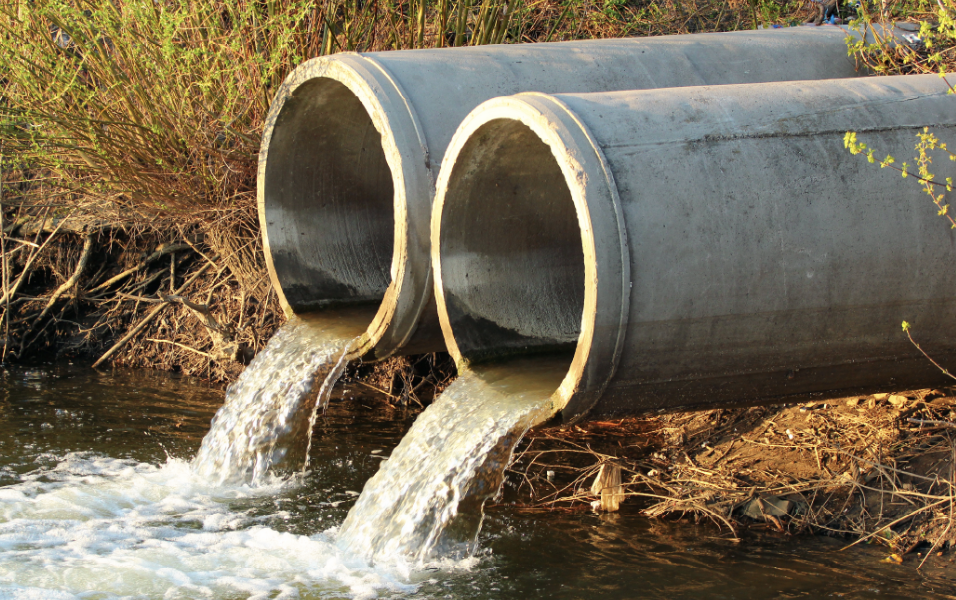
For complex effluents such as landfill leachate—whose composition evolves over decades—this approach is flawed. Even when discharge criteria are met, residual environmental risk remains, particularly as new contaminants of concern continue to emerge.
A nature-based solution predicated on a zero-liquid-discharge (ZLD) approach fundamentally changes this equation. By eliminating effluent release and containing contaminants on-site, ZLD shifts the objective from managing downstream impacts to preventing exposure altogether. From a risk management perspective, this is often the most conservative and environmentally protective option available.
Nature-based wastewater treatment systems built around evapotranspiration align naturally with this logic. Rather than treating wastewater for discharge, they reduce volumes biologically, retain contaminants within soils and biomass, and keep the entire mass balance within the site boundary. Clean, nearly pure water is reintroduced into the water cycle as water vapour, which both cools the atmosphere, and re-enters nature as clouds, then rainfall.
Willows are the engine in Ramo’s large-scale phytotechnologies

Among the plant species studied for wastewater and leachate management, shrub willows have emerged as particularly well suited to large-scale applications. Their rapid growth, extensive (yet shallow) root systems, high water uptake capacity, and tolerance to variable wastewater quality make them effective biological pumps.
In evapotranspiration-based systems, leachate or wastewater is applied in a controlled manner to willow plantations. The trees absorb water and nutrients through their roots, release water vapour to the atmosphere, and immobilize many contaminants within plant tissues and soils. Application rates are adjusted continuously based on soil conditions, weather, and plant uptake capacity, allowing the system to function as managed infrastructure rather than a passive landscape feature.
This type of system—often referred to as Evaplant-style treatment—does not rely on discharge. Its primary function is volume reduction and containment, making it particularly relevant for sites where effluent release is undesirable or impractical.
What if zero discharge is also the answer to PFAS?
Per- and polyfluoroalkyl substances (PFAS) highlight the limits of discharge-based wastewater management. These persistent compounds are increasingly detected in landfill leachate and municipal wastewater streams yet remain difficult and costly to remove using conventional treatment technologies.
Even when advanced systems reduce concentrations, discharge transfers residual uncertainty downstream. A zero-discharge approach reframes the challenge. By containing effluents on-site, evapotranspiration-based systems reduce the risk of releasing PFAS—and other harmful substances—into aquatic environments.
Just as importantly, zero discharge offers a precautionary response to contaminants that may not yet be regulated or even identified. Rather than continuously adapting discharge limits to an evolving list of substances of concern, containment-based strategies assume uncertainty and manage risk at the source.
Regulatory systems built for discharge, not containment
Despite its environmental logic, zero discharge can pose regulatory challenges. Most permitting systems are designed around discharge points, concentration limits, and receiving environments. When there is no discharge, many conventional criteria simply do not apply.
As a result, project proponents often need to work closely with regulators to redefine performance metrics—focusing on containment, mass balance, long-term monitoring, and environmental outcomes rather than effluent concentrations. These challenges are institutional rather than technical, and they highlight the need for regulatory frameworks that recognize containment as a legitimate—and often superior—form of environmental protection.

Cost accessibility and system flexibility
One of the most compelling advantages of nature-based wastewater treatment is economic accessibility. Conventional treatment plants require significant capital investment, continuous energy input, and ongoing chemical and mechanical maintenance. For smaller or remote communities, these costs can be prohibitive.
Evapotranspiration-based systems generally involve lower capital costs and substantially lower operating costs. Their primary requirement is land area. Where sufficient surface is available—such as landfill buffer zones, closed cells, or degraded lands—this trade-off is often favourable.
These systems can function as standalone solutions for sites without treatment infrastructure, or they can be integrated with existing systems to reduce hydraulic load, improve performance, and delay costly expansions.
Carbon capture as a co-benefit
Unlike conventional treatment infrastructure, willow-based systems actively capture carbon through biomass growth. This carbon sequestration occurs while the system is performing its primary wastewater management function, creating a dual environmental benefit.
At scale, this combination of wastewater management and carbon capture strengthens the climate rationale for nature-based solutions and helps reposition wastewater infrastructure as part of broader climate mitigation strategies.
Canada’s strength in phytotechnologies
Canada has been a leader in phytotechnology research for several decades. Universities and research institutions have developed strong expertise in plant-based remediation, wastewater treatment, and soil restoration.
The challenge has not been science, but deployment at scale. Bridging the gap between research and operations requires rigorous design, long-term monitoring, and close collaboration between agronomy, engineering, biology, and chemistry.
Rethinking wastewater treatment outcomes
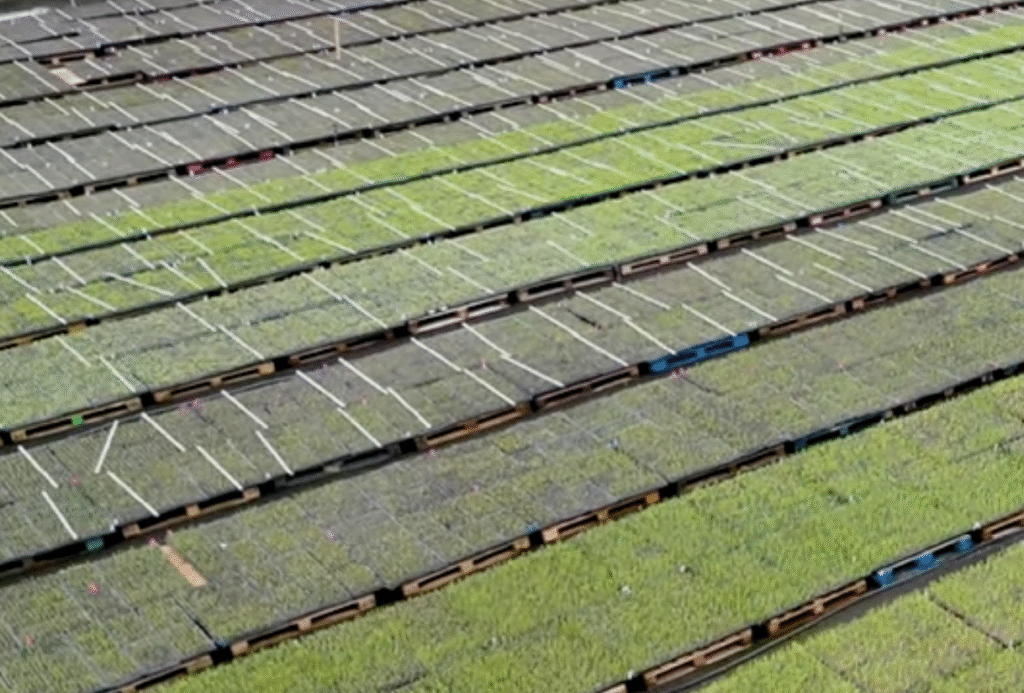
The question is no longer whether nature-based solutions—such as willow-based evapotranspiration systems—can work at scale. Field experience shows that they can.
The real challenge lies in adapting regulatory frameworks, planning assumptions, and infrastructure strategies to move beyond discharge-centric thinking. If managing wastewater and leachate while containing contaminants on-site and capturing carbon is possible—and increasingly necessary—then nature-based solutions deserve a far more prominent role in Canada’s approach to wastewater and leachate management.