Chasing Zero: How We Cut 80% of Our Landfill Waste
What happens when a clothing brand treats every scrap of fabric as inventory instead of trash? Sue Cadman shares how Miik cut its landfill waste by roughly 80% without high-tech machinery or a large budget. Drawing on Miik’s experience manufacturing locally in the Toronto area, she explains what worked, from tighter cutting layouts and community fabric donations to selling imperfect pieces and a peer-to-peer resale program, and where the company hit walls. Sue offers practical lessons any brand can apply, and is candid about the remaining 20% still to solve.
When people talk about fashion’s waste problem, we usually picture mountains of cheap polyester dumped in the Atacama Desert, or piles of disposable clothes from fast-fashion hauls. That consumer side gets all the press. But if you run an apparel brand, you know the waste that no one talks about happens long before a customer buys anything: on the cutting table, on the quality-control rack, and years later when an item sits unworn in a closet.
At Miik, manufacturing locally in the Toronto area gives us a clear view of our footprint, and sometimes it’s unsettling. Our production isn’t happening thousands of miles away. We see the off-cuts piling up beside the fabric spreads, the garment pulled aside because of a single skipped stitch, and the bins waiting at the back door.
Over the last few years, we’ve managed to cut our landfill output by roughly 80%. We didn’t do it with high-tech machinery or a splashy PR campaign. We did it by treating every scrap of fabric and every finished piece as usable inventory instead of trash waiting to happen.
We’re still not at 100% zero-waste, and closing that remaining 20% gap is an ongoing challenge we’re actively working through. But we refuse to treat the commercial dumpster as an inevitable cost of doing business, and that has completely changed how we think about our operations.
Here is how we did it, where we ran into walls, and what has actually worked.
1. Pre-Consumer Off-Cuts: The Cutting Room Floor
In garment manufacturing, anywhere from 10% to 15% of fabric gets tossed before a sewing needle even touches it. Because we custom-mill our own rayon from bamboo and modal fabrics, watching usable materials get swept into trash bins was painful.
Our first instinct was to have recyclers grind and re-spin our scraps. We hit a wall immediately. Recyclers almost exclusively handle unblended fibers like pure cotton—our 10% spandex blend makes mechanical re-spinning nearly impossible, and no commercial facility was sending a truck for small-batch blends.
We had to manage it ourselves through four steps:
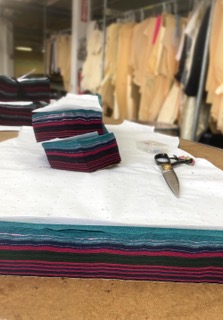
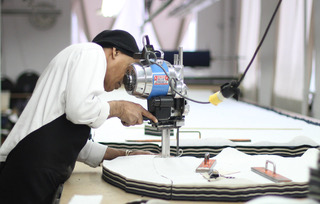
- Tighter digital markers: We stopped laying out cut patterns the old way and started nesting mixed garment styles and multiple sizes onto the same fabric spread. Squeezing an extra 4% to 6% yield out of a bolt saved dozens of rolls from hitting the scrap pile.
- Micro-runs, accessories, and internal use: Anything long or wide enough gets collected right off the table. We turn those strips into scrunchies, headbands, belts, pocket linings, and reusable gift bags. For awkward scraps of certain sizes that can’t be sewn into products, we don’t even cut them down, we simply use them as hand towels in our office bathrooms to reduce our paper towel use.
- Community partnerships (The Love Club): Roll ends (the yardage at the end of a bolt that’s too short for a full production run) and discontinued fabric lines used to sit on our shelves indefinitely. Now, we bundle roll ends and clean surplus fabric for The Love Club, a grassroots Toronto initiative that sews baby clothing kits for women in need and new mothers across Ontario. It gives beautiful fabric a purpose instead of gathering dust.
- Markham textile recycling: For the irregular trimmings that can’t be sewn into accessories or donated, we send batches to a dedicated textile recycler in Markham. They mechanically process the scraps into industrial-grade fiber for things like automotive insulation, soundproofing, and wiping rags. It’s downcycling, not a closed loop, but it keeps tons of material out of the dump.
2. The Pre-Sale Bin: Dealing with “Less-Than-Perfect” Pieces
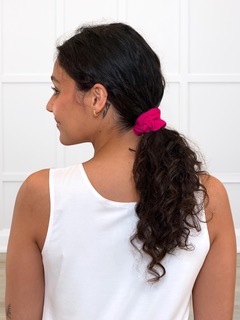
Photo Credit: Miik Inc.
Traditional apparel quality control is unforgiving. A tiny drop-stitch near a hem, a dye run, or a seam tension that’s off by two millimeters usually means the garment gets pulled. Across the industry, standard practice has often been to slash or burn imperfect garments to protect brand exclusivity.
We decided that scrapping a completely wearable garment over a cosmetic hiccup makes zero sense.
Because our sewing teams are right here in Ontario, our first line of defense is simply mending what we can in-house. When a cosmetic flaw can’t be fixed without unpicking the whole garment, we don’t discard it. We set it aside for dedicated sample and “imperfect” sales.
We photograph or describe the minor flaw clearly, drop the price, and sell it directly to our community. Customers appreciate the honesty, the pieces find loving homes, and inventory we spent real resources making never touches a waste stream.
3. Closing the Loop: Keeping Garments in Wardrobes
The most sustainable piece of clothing is the one that’s already made. But people change sizes, lifestyles shift, and clothes sit idle in drawers. Too many people focus on a garment’s pre- and post-life, but not enough on the middle. To fix that, we created a dedicated peer-to-peer resale community for pre-loved Miik clothing that keeps it in rotation longer.
It lets our customers buy and sell gently worn Miik items directly from each other. Buyers get ethically made clothing at accessible prices, and garments stay out of landfills and donation bins.
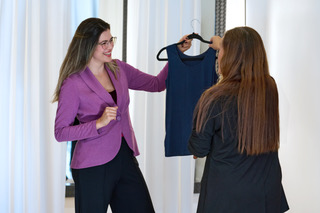
This only works because of how the clothes are made from day one. You can’t run a viable resale program on flimsy seams or fabrics that pill after three washes. We mill our fabrics specifically to hold their shape, stay colorfast, and recover over years of wash and wear.
Just as importantly, we design timeless, classic silhouettes rather than fleeting micro-trends. If a piece looks hopelessly dated after eight months, nobody wants to buy it second-hand. When you build durable construction into classic, versatile garments, the clothing easily outlives its first owner.
What Other Brands Can Borrow on Monday Morning
If you run a manufacturing business or consumer brand, cutting waste doesn’t require an endless budget or an army of consultants. It comes down to four practical habits:
- Treat scraps like inventory, not garbage: Off-cuts have value. Route them into accessories, internal workplace supplies, local charities, or commercial shredders.
- Stop hiding your seconds: Customers don’t demand robotic perfection; they value transparency. Give slightly flawed items a home and a fair price.
- Design for the third owner, not just the first: Invest in sturdy fabrics, durable stitching, and classic styles that outlast current trends. Circularity starts on the sketchpad.
- Be honest about the rest: You won’t hit zero waste tomorrow. Acknowledge the stubborn 20%, keep auditing your bins, and stay open to new local partners who might have a use for what you can’t solve alone.
Circularity isn’t an all-or-nothing test. It’s just a daily discipline of asking: Who else can use this, and where can it go next? When you make that question standard practice, an 80% reduction isn’t a pipe dream—it’s just steady, sensible work.