CO₂ Is a Problem. Can It Also Be Useful?

Capturing carbon dioxide keeps it out of the atmosphere, but what should we do with it next? Dr. Paul Addo, Co-founder and CEO of SeeO2 Energy and a 2027 Clean50 honouree, argues that some captured CO₂ can become a valuable industrial raw material, but only where the full lifecycle delivers a real emissions benefit. Drawing on his experience taking SeeO2’s solid oxide electrochemical technology from University of Calgary research to industrial pilot testing, Paul explains why CO₂ is so difficult to convert, what it takes to turn a laboratory result into a product industry can use, and how to tell when using CO₂ genuinely helps the climate. He makes the case for treating CO₂ conversion as one tool in a broader decarbonization strategy, supported by steady policy and financing that help Canadian innovations make it from the lab to the market.
Reducing carbon dioxide emissions must remain our first priority. Wherever we can avoid producing CO₂, we should. But some industrial emissions are difficult to eliminate immediately. When we capture those emissions, another question follows: should we store the CO₂ permanently, or could some of it become a useful raw material? There is no single answer. Both approaches have a role, and choosing between them requires evidence.
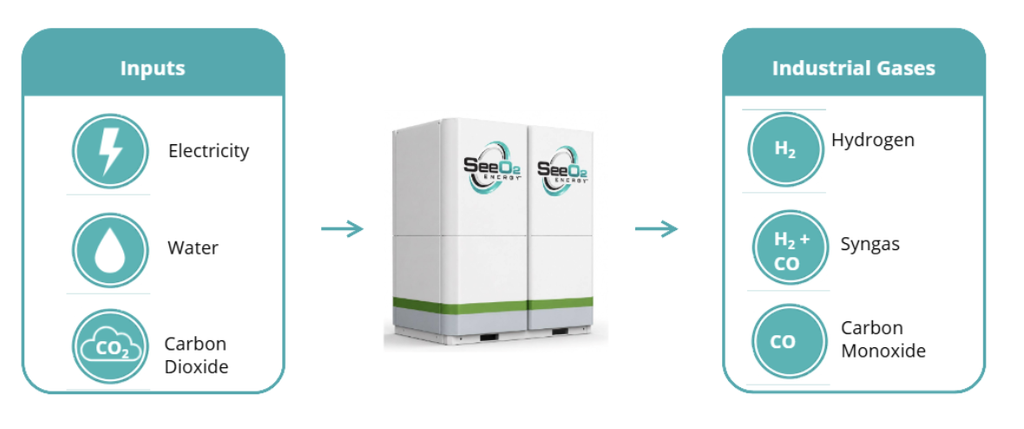
That question has shaped much of my work as a chemist and entrepreneur. At SeeO2 Energy, we are developing a solid oxide electrochemical (SOE) technology that uses electricity and heat to convert CO₂ and water into industrial feedstocks including carbon monoxide, hydrogen and syngas. These are not unfamiliar chemicals in search of a market. They are established building blocks for fuels, chemicals and other materials. What we are working to change is how they are produced.
Why CO₂ Is Difficult to Convert
CO₂ is a challenging starting material because it is chemically stable. Converting it into other products requires energy, and that energy has both a cost and an environmental footprint. We cannot assume a process is beneficial simply because it consumes captured carbon. The electricity source, conversion efficiency, origin of the CO₂ and eventual use of the products all matter. The scientific question is whether we can convert CO₂; the larger question is where conversion makes sense.
Electrochemistry offers one route. SeeO2 grew from research in solid oxide electrochemical technology at the University of Calgary. These systems operate at elevated temperatures, allowing part of the energy required for conversion to be supplied as heat rather than electricity. Depending on the feedstock and operating conditions, the technology can convert CO₂ and/or water into carbon monoxide, hydrogen or syngas. The chemistry is compelling, but its industrial relevance lies in what customers can do with those products.
Syngas is a mixture composed primarily of carbon monoxide and hydrogen. Industry already uses it as an intermediate to make methanol and other chemicals. Through processes such as Fischer–Tropsch synthesis, it can also be converted into liquid hydrocarbons that can be refined into transportation fuels. This existing demand matters. Rather than asking customers to adopt an entirely new class of products, we are exploring a different route to feedstocks they already understand, purchase and use.
The potential applications are diverse, ranging from chemical feedstocks and metallurgical processes to synthetic fuels for hard-to-electrify sectors like aviation and marine transport. Meanwhile, many industrial facilities produce concentrated CO2 streams that could serve as inputs.
Yet technical possibility is not the same as a viable business case. Not every application will be worthwhile; turning a laboratory result into an industrial solution requires clear alignment. The strongest opportunities will connect a suitable CO2 source, affordable low-carbon energy, established customer demand, workable site integration, and credible economics.
From Research to Industrial Reality
What drew me to this field was the possibility of addressing an environmental challenge while building something useful from science. As our research progressed, I became increasingly interested in a harder question: could we take the technology beyond the laboratory and make it work for industry? That meant moving beyond the satisfaction of demonstrating a reaction to the much less predictable work of developing a product. The ambition to make that transition became SeeO2 Energy.
The transition changes the questions you must answer. In the laboratory, demonstrating a reaction is an achievement. For an industrial customer, it is only the beginning. The technology must deliver the required product consistently, withstand extended operation and fit within existing infrastructure. Energy use, maintenance, reliability and cost become as important as electrochemical performance. A promising process is not yet a practical product.
That reality has shaped our development path. We have advanced through extended integrated-system testing and into pilot testing, learning how the technology performs not only as individual components but as a complete system. High-temperature operation brings demanding materials and thermal-management challenges. Components must work together, and performance must remain stable over time. Some questions can be answered in the laboratory; others only become clear when the system operates under conditions closer to those a customer will face. Each stage has reinforced an important lesson for me: commercializing science means proving reliability, not simply demonstrating possibility.
When Is CO₂ Utilization Truly Beneficial?
The same discipline applies to environmental claims. Because CO₂ is a greenhouse gas, converting it into a useful product can sound automatically beneficial. It is not. The climate value of utilization depends on the full pathway, not simply on whether captured carbon enters a reactor.
Consider synthetic fuel. Captured CO₂ can be converted into carbon monoxide or syngas and used to produce liquid hydrocarbons. When that fuel is eventually burned, CO₂ may return to the atmosphere. Utilization is therefore not equivalent to permanent storage. A potential emissions benefit comes from comparing the full lifecycle of the new fuel with that of the conventional fuel it replaces. Where the carbon came from, how much energy was used, and how that energy was generated can change the conclusion.
That is why we have to look beyond the electrochemical technology. Where does the CO₂ come from, and what is its composition? Is affordable low-carbon electricity available? What product does the customer need, and how is it currently produced? Can a new system be integrated without creating excessive operational demands? Above all, does the complete pathway offer a meaningful emissions benefit over the conventional alternative? These questions connect the chemistry to engineering, economics and lifecycle impact.
CO₂ utilization should therefore be one option within a broader industrial decarbonization strategy, not a universal answer. We should prevent emissions wherever feasible, electrify processes when that is practical, and use permanent carbon storage where it is the better solution. In selected applications, converting captured CO₂ into useful feedstocks may complement those efforts. The objective is not to find a use for every tonne of carbon dioxide; it is to identify the uses that genuinely justify the energy and resources required.

Turning Canadian Innovation into Industrial Impact
Answering those questions requires more than good chemistry. It requires the capacity to develop, validate, manufacture, and deploy technology in real industrial settings. I see an important opportunity for Canada here. SeeO2 began with research at the University of Calgary, where access to advanced research infrastructure helped us develop and test the processes behind the company. Early engagement with industry challenged us to think about what customers actually needed and what it would take to deliver it.
Canada is good at producing research. Our opportunity is to carry more of that research through the difficult stages that follow: engineering development, industrial validation, manufacturing and deployment. Those stages require persistence, collaboration and investment, often long before the outcome is certain. When we build that capability here, the return can be more than environmental. The expertise, intellectual property, companies and industrial know-how can grow in Canada too.
That progress also depends on an environment in which innovators and investors can plan for the long term. Predictable government policies and consistent support matter, especially for industrial technologies that take years to validate and scale. So does access to the right financing at each stage: non-dilutive funding for R&D, demonstration, and manufacturing alongside dilutive investment that can support company growth and commercialization. These sources of capital play different but complementary roles. Without continuity between them, promising technologies can stall in the gap between a successful pilot and a commercially viable product. Building a stronger pathway from research to market means addressing that funding gap as deliberately as we address the engineering challenges.
At SeeO2, that work continues. We have made progress, but there are still operating hours to accumulate, manufacturing challenges to solve, industrial integrations to demonstrate and economics to validate as we move toward broader deployment. I see those challenges not as a departure from the science, but as the next test of its value. Our focus is to keep building the evidence and identify the applications where the technology can make the greatest practical contribution.
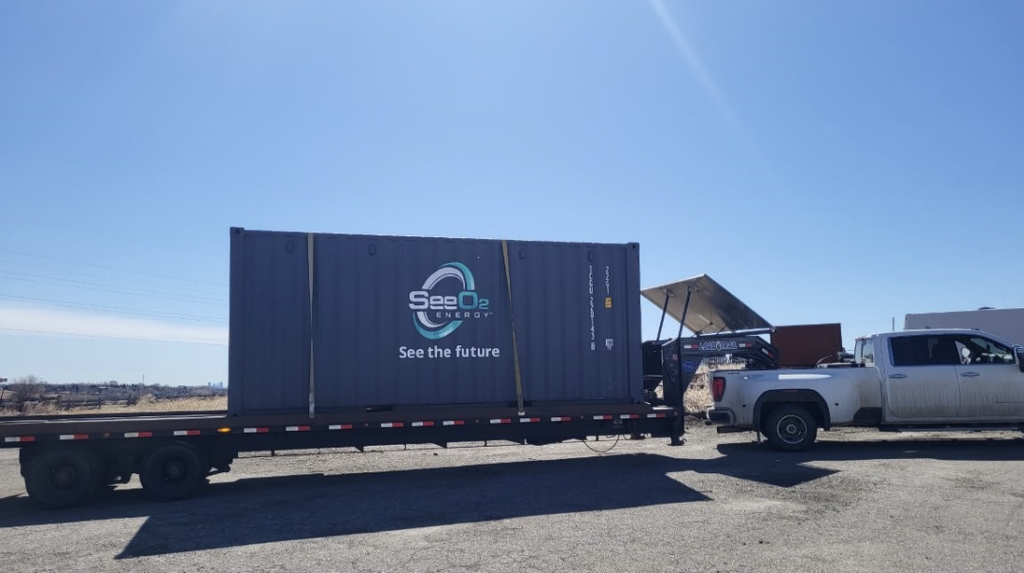
En Route to Net-Zero: Containerized SOE technology, putting advanced Canadian clean-tech into real-world action.
CO₂ is a problem. Finding a use for some of it does not make that problem disappear. But when the energy, chemistry, economics and lifecycle impacts align, captured CO₂ can also become a starting material for products industry already needs.
For me, that possibility brings together the two things that attracted me to this work in the first place: addressing an environmental problem and building something useful from the science. The chemistry shows us that CO₂ can be useful. The work now is proving where it makes sense.