New Oil Crisis – Same Lesson…

As the world reels from yet another oil crisis, one fact is hard to ignore. The sun and the wind are never getting stuck in the Strait of Hormuz…
Every time tensions flare in the Middle East, global oil markets panic. Tankers slow, traders react, and prices spike. Suddenly our supply chains, our companies’ profitability, and Canadians’ household budgets are tied to decisions made by political leaders across the border – and half a world away. Let’s face it. No one is threatening the container ships carrying furniture or grain through the Strait. It’s the oil traffic that matters.
Which means our transportation system, our industries, and a big part of our economy remain exposed to geopolitical brinkmanship. A handful of leaders on the other side of common sense can send prices soaring around the world overnight.
And yet the alternative is increasingly obvious. Wind turbines and solar panels do not depend on shipping lanes or fragile alliances. Electricity generated at home, backed by storage and a stronger grid, ensures our energy future and energy security is kept in our own hands.
There is another irony here. For years, critics and politicians of a certain stripe whined endlessly that the carbon price was making life unaffordable. This despite evidence that in reality, most Canadians received more back through rebates than they paid directly or indirectly, and especially households that electrified with EVs or heat pumps. But when global oil shocks allow producers to capture massive windfall profits on their existing inventories, those same critics are largely – and strangely – completely silent.
So… Maybe it wasn’t actually about the price of gas after all…? Maybe just shills for the oil industry?
Meanwhile, EV drivers largely shrug. They plug in and move on…
The obvious answer is to invest in three things: massive renewable energy and grid-scale storage, a stronger and more interconnected electricity grid across Canada, and electrifying everything from vehicles to heating systems.
And let’s stop pretending the clean economy is some niche sector. In Canada it is already larger than oil and gas — more than $200 billion compared to roughly $160 billion — and it has the potential to triple in the next decade. The oil sector will likely stay flat or shrink.
California and China have already figured this out. Canada should too.
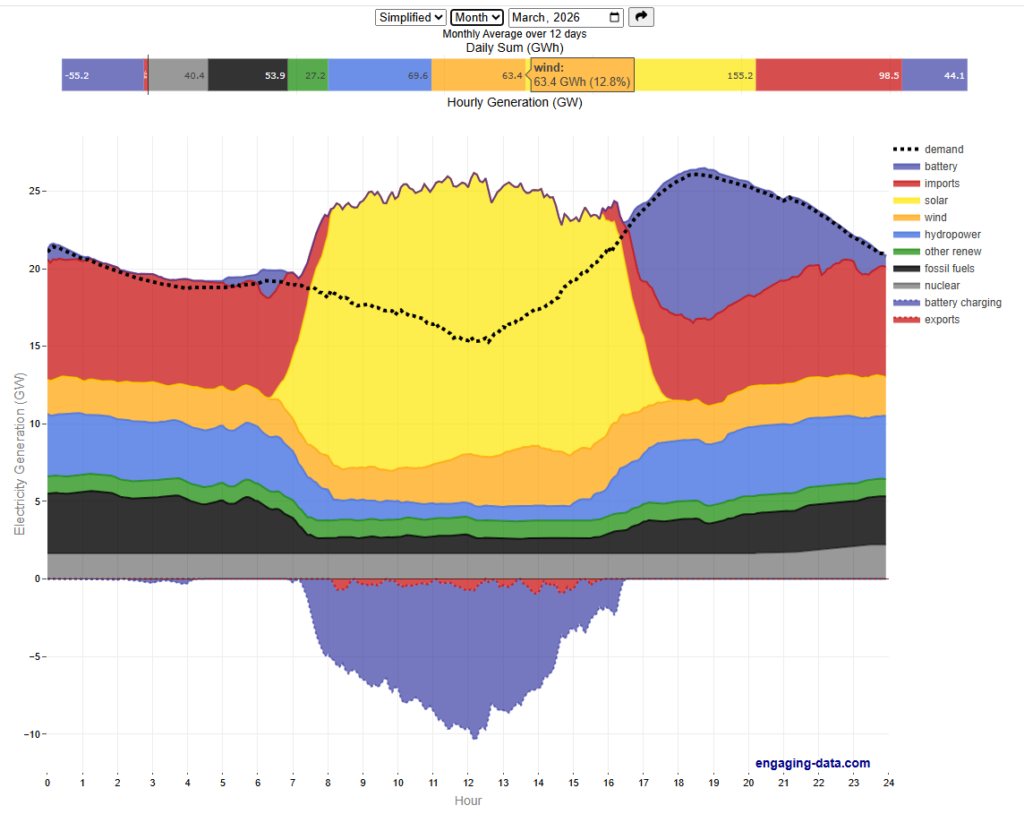
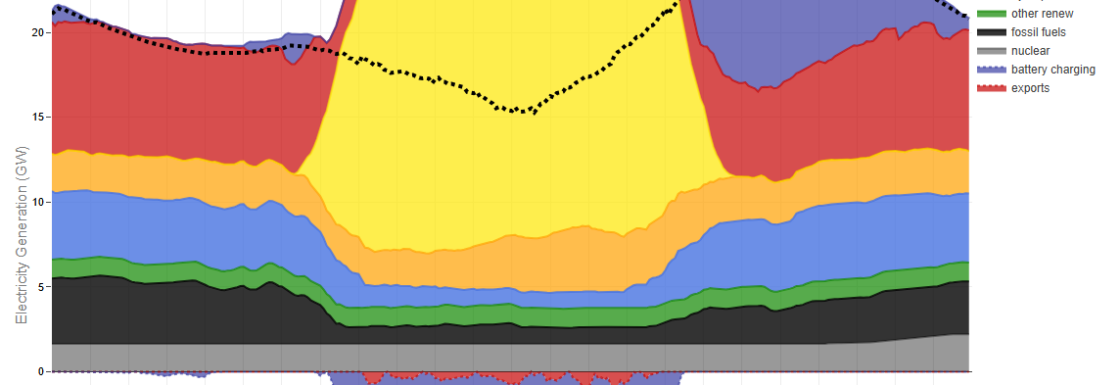
The picture above shows how all of California’s grid was powered for the first 12 days of this month. That purple? Batteries absorbing excess solar and charging during the day – discharging while meeting peak evening demand as solar declined. And that yellow – solar in what is still winter in the northern hemisphere.
Every oil crisis tells the same story. The sooner we electrify everything and reduce our dependence on oil, the sooner Canadians take real control of their energy future.
One last thought: All those voices claiming Canada could make a difference by exporting more oil? Nonsense and they know it. The blockade has taken 200 million barrels of oil a day out of the market. Even if Canada had the pipeline that proponents seem to want, first it would be sending oil that fewer people want or care about and not easily transformed into gasoline – and secondly – capacity would be about 1 million barrels a day if running at full bore: So about one half of one percent of the present shortfall…