National Retail Recycling for Electronic Waste
Projects Sponsor

Delta Management Group is the leading sustainability, ESG and clean tech focused search firm in Canada. Delta is proud to have founded the Canada's Clean50 Award program in 2011, and has been the primary sponsor for the past 13 years.
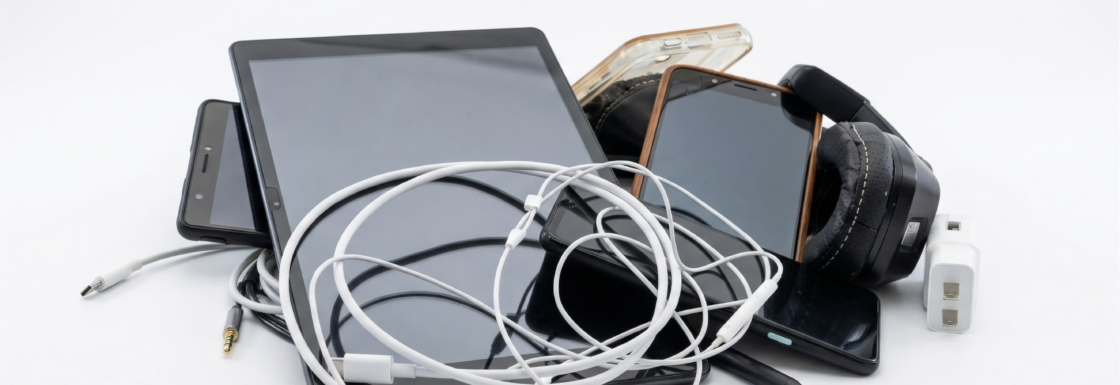
Most households have a drawer filled with old phones and gadgets they don’t know how to dispose of safely. This initiative provides a simple solution: open-access, contactless drop bins in over 200 TELUS stores across nine provinces. The program accepts any device from any carrier or retailer, no account required. To resolve the data-privacy concerns that plagued previous industry efforts, all returned devices are securely wiped and shredded by a certified recycler rather than resold. Since full deployment in January 2026, the network has successfully diverted the equivalent of 340 phones, with processing volumes accelerating rapidly.
Old phones tend to pile up in junk drawers for one of three reasons: customers are not sure where to take them, don’t want to hand over their data, or they’re not a customer of the company holding the recycling bin. TELUS built its Return & Recycle program to remove all three barriers at once, and in doing so helped tackle Canada’s generation of over a million tonnes of e-waste annually, where less than 20 percent of it gets formally collected and recycled. Most of this stubborn problem isn’t apathy; it’s friction.
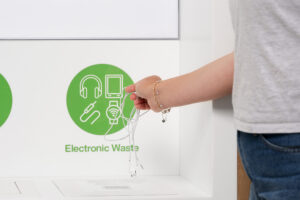 The program’s design brief was unusually strict about what it would not be. It would not require registering a device or engaging with staff before dropping it off. It would not restrict itself to phones bought at TELUS, and it would not accept anything without first solving the data problem, since a returned phone can carry personal, financial and health information that most people forget is still sitting on it. Expanding from an initial idea to over 200 open access bins across nine provinces required a complete rethink of how a national retailer uses its footprint.
Retail floor space is extremely limited, making the addition of a recycling bin an effort that required strategic internal buy-in. TELUS answered that resistance by forming a “Sustainability Squad” to bring the store design team into the process with real creative ownership over how the bins would look and function, backed by a business case showing that in-store recycling bins actually drive foot traffic and give sales reps a reason to talk to people who aren’t yet customers. Data privacy was the second wall to clear, as after extensive cross-functional review, TELUS settled on a recycle-only model with no reuse pathway, requiring complete physical destruction of every device rather than a wipe-and-resell approach that would have left more residual risk on the table. Storing valuable electronics in an open retail environment raised its own theft concerns, solved with tamper-proof infrastructure, wall-fastened units in renovated stores and heavy custom steel bins everywhere else, paired with clear procedures for staff handling anything that looked like trouble.
Before launch, TELUS commissioned a lifecycle assessment specifically to keep its own environmental claims honest rather than marketing-driven. That research, conducted with Solas Energy, found that recycling a single smartphone cuts emissions on the next generation of devices by 32.4 percent and reduces manufacturing waste by 99.98 percent, roughly the CO2e a mature spruce tree absorbs in a year and the equivalent weight of dozens of car tires in avoided waste. Those numbers now anchor the program’s public messaging rather than sitting in an internal report nobody reads.
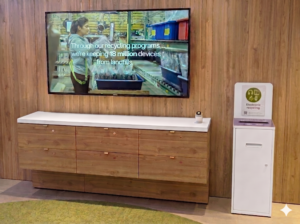 Since the final bins went live in January 2026, the network has accepted everything from phones and tablets to charging cables, headphones, fitness trackers and tablet accessories, a scope deliberately wider than just mobile devices. The program has already diverted 68.3 kilograms of material, equivalent to roughly 340 devices, a modest number by design since collection only recently reached full national coverage; volumes are expected to climb quickly as awareness catches up to convenience. Downstream, eCycle Solutions handles the material through certified mechanical shredding and optical sorting, issuing formal Certificates of Destruction while feeding recovered plastic and precious metals, including the copper, gold, cobalt and lithium locked inside every phone, back into the manufacturing supply chain rather than a landfill.
The real test of an e-waste program has never been whether it can collect devices from loyal customers who already trust the brand. It’s whether it can get a stranger who bought their phone somewhere else to walk in and drop it off anyway. Full store lists sit publicly at telus.com/recycle, and the program is backed by a public Earth Month campaign built to spread that awareness further than word of mouth alone could manage.
By solving the data security question first, opening the bins to anyone regardless of where they bought their device and backing every environmental claim with an independent lifecycle study rather than a marketing assertion, TELUS built a program that other retailers, in telecom or otherwise, don’t have much excuse left not to replicate. The hardest problems in electronic waste were never really about the recycling technology; they were about trust, convenience and commitment to weaving end-of-life product management into everyday operations.













