PozGlass: Turning Recycled Glass into Low Carbon Cement
Projects Sponsor

Delta Management Group is the leading sustainability, ESG and clean tech focused search firm in Canada. Delta is proud to have founded the Canada's Clean50 Award program in 2011, and has been the primary sponsor for the past 13 years.
Glass bottles and bags of cement seem like an odd pairing, but they could solve each other’s biggest problems. Cement production accounts for roughly 8 percent of the world’s carbon emissions, and PozGlass technology tackles it by grinding post-consumer glass, including mixed colours once considered unusable, into a supplementary material that swaps in for up to half of a batch of Portland cement. Backed by nearly $6 million in public funding and validated by leading players in the cement industry, the pilot plant in Kamloops is nearing commissioning. At full commercial scale, the process could eliminate more than 10 million tonnes of CO2e a year, turning a recycling headache into concrete’s best supporting ingredient.
Cement has a carbon problem that is very difficult to engineer around. Producing it accounts for roughly 8 percent of the planet’s CO2 emissions, and the industry’s supplementary materials, mostly fly ash from coal plants and slag from steel mills, are running scarce as both of those industries wind down. Meanwhile, glass keeps piling up in landfills because mixed colours and commingled streams make most of it unrecyclable by conventional means. Progressive Planet looked at both problems and asked whether one could solve the other.
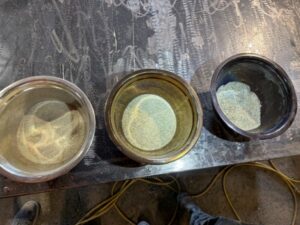 Progressive Planet’s team started at the problem’s chemistry. Finely ground glass behaves as a pozzolan (an ingredient used to make cement), reacting with calcium hydroxide in cement to strengthen concrete much the way fly ash does. The trouble was that only clean, single-colour glass had ever been considered usable for this purpose, a fraction of what gets thrown away. Research into processing methods and performance standards revealed that mixed-colour, lower-quality glass, previously written off entirely, could be blended with natural pozzolans to produce a viable substitute, multiplying the usable glass supply roughly tenfold.
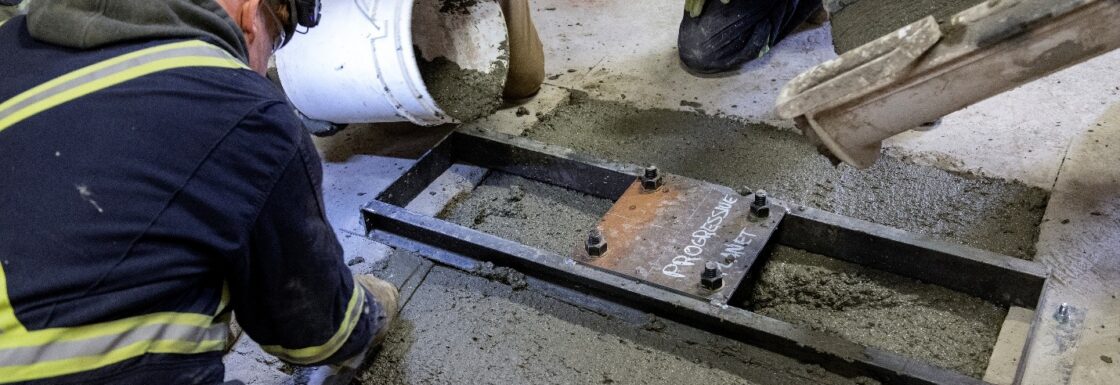
Turning that finding into a product meant building infrastructure. Progressive Planet developed a proprietary pre-treatment and blending process in-house, then became a registered recipient of post-consumer glass through BC recycling depots, striking long-term agreements with municipal and private waste handlers for commingled glass, metal and plastic streams. A custom mechanical processing line in Kamloops now sorts that stream onsite, recovers plastics, extracts metal for scrap resale, and isolates the ground glass destined for cement.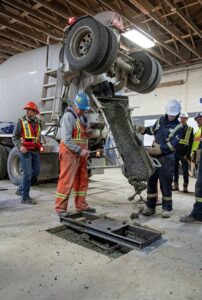
The resulting product, PozGlass 100G, went through validation at multiple external cement laboratories, including Lafarge Canada, the Canadian arm of the world’s largest cement producer, and a second major international manufacturer operating under a confidentiality agreement. Lafarge didn’t just validate the product; it contributed engineering services and committed to an offtake of 3,500 tonnes annually to test PozGlass in the real market. Backed by $5.7 million in combined grants from SDTC Canada and the BC ICE Fund, a pilot plant in Kamloops is now in its final stages of commissioning.
The technical case is settled: PozGlass 100G meets ASTM and CSA standards, replacing up to 50 percent of Portland cement on a one-for-one basis, confirmed by independent lab testing rather than internal claims alone. At commercial scale, that substitution rate could eliminate more than 10 million tonnes of CO2 annually across North America while diverting 100,000 tonnes of waste glass from landfills and producing over 1 million tonnes of blended cement product each year. The process also captures CO2 directly from flue gas, converting it into limestone at a rate of up to 3,000 tonnes annually at pilot scale, a sequestration bonus layered on top of the substitution benefit.
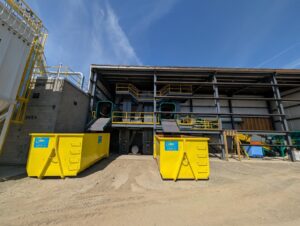 Feedstock was the first real obstacle. Post-consumer glass in BC arrives commingled with metals, plastics and organics, useless for cement applications without serious processing, which is exactly why Progressive Planet built its own sorting infrastructure rather than waiting for someone else to supply clean material. Market inertia was the second, tougher problem: cement’s supplementary material mix has barely changed in fifty years, with fly ash and slag deeply entrenched incumbents. Convincing a conservative global industry to adopt something new took Stephen Harpur (CEO of Progressive Planet) directly engaging Lafarge, turning that relationship into the technical validation and offtake commitment that has since opened doors to further commercial conversations. A third challenge was geography, as glass recycling infrastructure clusters in cities, leaving rural feedstock thin, addressed by blending glass with natural pozzolans sourced from Progressive Planet’s own quarry operations.
What makes PozGlass more than a clever lab result is the licensing model behind it. Because post-consumer glass exists in every province and cement is manufactured nearly everywhere, Progressive Planet built the technology to be deployed under royalty-based licenses rather than confined to a single facility, meaning that the benefits to climate increase with the number of plants adopting it rather than staying capped at one location in the BC interior. A commercial-scale life cycle assessment, now underway through Brightspot Climate Corporation, will put a final, independently verified number on the lifecycle emissions case, building on internal pre-pilot engineering that already points to reductions exceeding 50 percent compared to conventional Portland cement.
Until that assessment lands, the Kamloops pilot plant nearing commissioning stands as the proof point the rest of the industry has been waiting for. 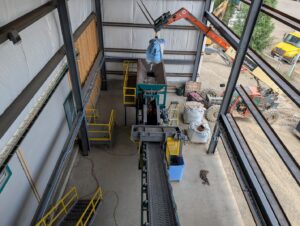 Cement’s supplementary material mix went essentially unchanged for half a century because nobody had a substitute both technically sound and available at real scale. Progressive Planet’s answer was to stop treating glass and cement as separate streams and start treating them as one supply chain, with a landfill problem on one end and an emissions problem on the other, that is no longer waiting for someone to run the chemistry that connects them.













