Silence is Deadly on Sustainability
The retreat from sustainability may look like caution, but Monika Freyman warns it risks undoing decades of hard-won progress. In her article, she argues that growing corporate and investor silence on climate and sustainability is creating a dangerous perception that the field is losing relevance just as it begins to deliver real economic change. She points to major gains in sustainability reporting, green bonds, clean energy investment, EV adoption, and climate taxonomies as evidence that sustainable finance is maturing into a decision-useful part of capital allocation. While acknowledging overpromising, jargon, data gaps, and incentive problems, that silence now could weaken momentum when leadership is most needed.
Corporate and Investor Silence risks undoing decades of progress
The far fewer leadership voices on the importance of sustainable and climate goals and practices within corporate and investment management circles is threatening to unravel over two decades and more of progress in Canada.
Some anecdotal information on the areas of concerns through recent conversations.
- A pension trustee no longer expecting their investment managers to consider climate and sustainability in investment research and decision-making.
- A CFO pulling back on previous capital expenditure plans focused on energy efficiency, lowering greenhouse gas (GHG) emissions and meeting corporate climate goals.
- Budgets frozen or shrinking for teams working on sustainability, climate or diversity initiatives.
- Young professional no longer certain if studying sustainable finance and climate investment is a good foundation for future career success.
These pauses and pullbacks are particularly unfortunate given global sustainable and climate practices are at a stage of driving real change in our economies and communities. It is possibly due to this real change happening on the ground that the status quo is having its last gasp in pushing back. We must not lose the positive momentum we’ve already built.
Speaking from my sustainable investing perspective, the improvements to investor datasets, research processes and portfolio management theory to date has been incredible to date. We are on an improvement pathway to more fully integrate both systemic sustainability factors (threatening the market Beta) and security level (the alpha).
Unseeing once you see
A pathway which provides a deeper understanding of our natural resource dependencies and impacts as we now move into seven of nine planetary systems moving into tipping points of no return[1].
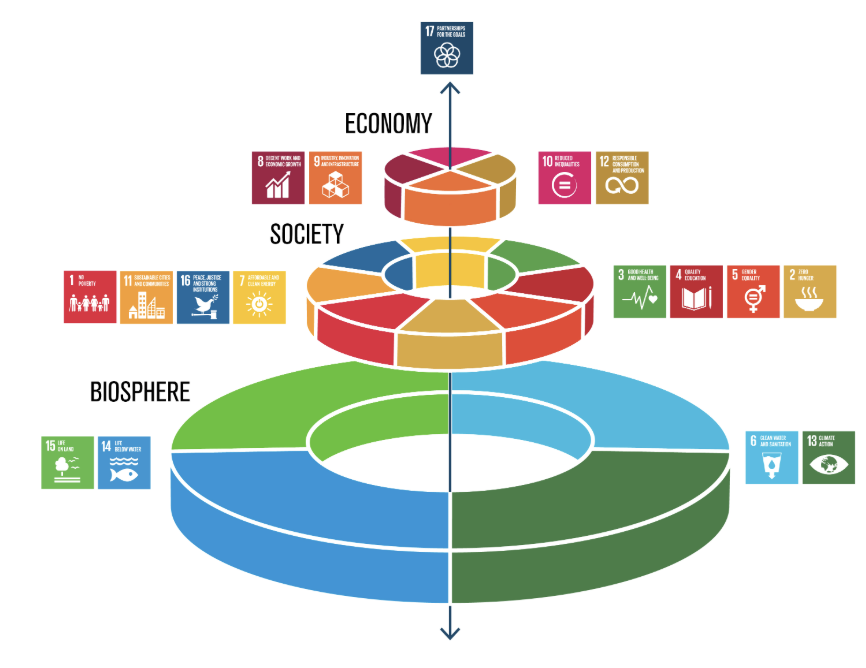
When modern portfolio management theory and practices were first developed in the 1950’s with their clean modeling and assumptions the world had only 2.5 billion people and far more abundant and resilient natural resources and intact ecosystems.[2] Our economy is now operating in a world of over 8 billion people with far greater competition for resources and far less planetary resilience. Sustainable investing practices recognize this reality by trying to embed more sustainability and climate metrics into their market data sets, tools and models. The metrics and models to date have been far from perfect but are on the cusp of being something great.
Credible and decision-useful sustainability and climate data has been decades in the making and is now at the cusp of a whole new level of maturity. When I first pivoted my career to sustainable investing, I had the good fortune to work with Steve Lyndenberg and David Wood, at the Harvard Kennedy School’s Initiative for Responsible Investing, to inform the launch of SASB (Sustainable Accounting Standards Board). The plan back then was to develop SASB as a voluntary framework that would provide investors with decision-useful sustainability data tailored to each sector. After all, financially material sustainability metrics required for airlines are not going to be the same as it is for a tech company. The plan from the beginning was to develop research, metrics and robust practices using this information to eventually inform regulatory mandated reporting of key sustainability metrics alongside financial statement information. Material sector-specific sustainability metrics, now improved and adopted by IFRS (International Financial Reporting Standards) are now at the cusp of becoming mandated, high-quality and comparable and ultimately far more decision-useful and lower cost for investors to apply globally and here in Canada through the Canadian Sustainability Standards Board (CSSB)[3]. The case of corporate sustainability reporting standards is emblematic of so many other incredible developments.

Highlight of some of the sustainable investing institutions and assets that have been created within the industry ecosystem:
- Global , regional, and asset class specific investor networks with guidelines of best practices and resources for shared learning.
- Institute and networks with deep expertise on specific sustainability issues such as Human Rights, Indigenous Rights and Reconciliation, Climate, Water, Agriculture and Food systems and Nature
- Research Institutes, organizations and Non-profits raising awareness and providing critical research, developing tools and frameworks for investors to better understand climate transition, nature dependencies and impacts and so much more
- Associations, Standard Setting bodies that establish critical principles and standards which helps maintain trust in sustainability claims and metrics enabling market and service growth.
- Second Party Opinion providers (SPOs) and auditors that further help drive market credibility and assurance and
- Sustainable Investing news publications and academic journals serving and advancing the sustainable investing ecosystem
- Academic finance and investor educational resources on sustainability and climate
These institutions and assets have driven some significant value. Some of the hard numbers on success includes:
- Over $USD 5trillion raised in the green, social and sustainable bond market for real projects driving climate mitigation and resilience. This is everything from deployment of energy efficiency projects, renewables, to low carbon rapid transit systems, better water treatment and management to projects focused on building community resilience.
- Over $4.8 trillion in retail SI investment fund products, up 45% since the previous five years.[4]
- The establishment of the Business Future Pathway with its mission to develop Canada’s sustainable investing and climate transition taxonomy, along with over 50 other national taxonomies already developed globally. [5]
- Renewable energy investment growth hit a record $386 billion in the first half of 2025, up 10% from the previous year, despite increasing policy uncertainty in regions such as the US and pull back from major projects. With the fastest growth now in smaller renewable energy systems. [6] With oil prices soaring, those regions and economies that have invested in a more diversified energy supply are becoming better positioned in their energy supply mixes. For example, over 20 states in the United States now have renewable energy capacity over 30% of their total energy capacity including in historically traditional oil states such as Texas[7].
- EV adoption, despite the pushback from established economies and car-markers has grown to 25% of new car sales growing, with the most rapid uptake in emerging economies.[8] That’s one in four cars sold globally. Electrification is spreading quickly in other areas of road transport such as buses where over 40% of new sales are electric[9].
Lots of political smoke, not much fire (yet)
This ecosystem risks beginning to atrophy in the silence of corporate, business and investor leadership voices on sustainability. The overnight switch from many strong voices just over a year ago to almost no one now voicing support for this ecosystem and efforts on sustainability has led to an assumption that these improvements and demands for services are in decline, that budgets and resources must be curtailed.
While its understandable that for those in the US it may not be worth raising one’s head over the parapet, it shouldn’t be assumed that the work is not continuing on the ground, especially given the incredible momentum underway.
Humble Lessons Learned to do better
While I believe some of the recent pushback is the status quo resisting the changes in the real economy, where sustainability had moved far beyond asking for better disclosure to driving capital in the economy away from some business models and practices to new ones. However, some of the pushback provides some reflections on how sustainable investing practioners can do better in the future:

- Over-promising. Sustainable investing as my colleague and I wrote at the end of the pandemic was at a stage of over-promising on what it could deliver. It failed to have an honest conversation with investors that moving to more sustainable practices is a messy business that takes time, resources and has real challenges. Too often shiny green goals were oversold as easily achievable. These green goals would have better been communicated as future aspirations and visions with a recognition of the challenges and years of work required by many — corporations, investors, innovators and policy makers.
- Patience required. It took between one and two decades for GDP to be established and accepted as a measurement of economic output. Sustainable and climate investment practices likewise require time to develop and become established.
- Pushback on Perfection. Too often sceptics demand that sustainable data and issues should be ignored because the information is not yet of high enough quality or consistency to be applied. Financial markets often operate on far from imperfect data and on incorrect assumptions also but are rarely questioned to as great a degree.
- Abominable Acronyms. The sustainable investing space uses far too many terms and acronyms that are not easily understood or accessible to the public. The CFA Institute, PRI and global standard setters for example came together globally to set out the key definitions of sustainable investing practices and these should be more consistently applied and referenced.[10] If your grandfather sitting across the kitchen table can’t understand the design of a sustainable investing fund than we have failed. Lack of clarity and over complexity can sow distrust and lack of adoption and advocacy for practices by the investing public. Targeting more retail and public engagement will drive a more positive virtuous circle of disciplined messaging and better understanding of practices and ultimately more political clout as the public understands and hopefully values these investment practices.
- More real conversations on incentive alignment. Portfolio managers are predominantly incentivized to achieve strong financial objective performance in the short to medium term. Issues such as mitigating climate risks, pushing for stronger Human Rights or workforce practices takes time, often beyond the performance windows of how these professionals are incentivized or clients are willing to wait for the change to take place. Most investment professional financial incentives are aligned with short term financial goals. If sustainability metrics are part of the incentive plan too often they are too small or too short term to drive real change in practice, while rewarding for balancing these with strong fiduciary oversight and financial goal performance.
The longer the silence continues the more at risk progress will be weakened, potentially to a point of no return. Too much has been accomplished. Too much opportunity awaits. In a world where it seems that only bullies have a voice it’s more important than ever to recognize that silence is costing too much, especially for future generations.
Endnotes:
[1] https://www.stockholmresilience.org/research/planetary-boundaries.html
[2] https://www.worldometers.info/world-population/world-population-by-year/
[3] https://www.ifrs.org/issued-standards/ifrs-sustainability-taxonomy/ and https://www.frascanada.ca/en/cssb
[4] https://www.morganstanley.com/insights/articles/sustainable-fund-performance-second-half-2025?utm_source=copilot.com
[5] https://www.businessfuturepathways.ca/about/ and https://www.climatebonds.net/expertise/taxonomy/world-taxonomies#:~:text=In%202012,%20Climate%20Bonds%20developed,more%20than%2030%20projects%20worldwide.
[6] https://rmi.org/the-state-of-utility-planning-2025-q4/
[7] https://en.wikipedia.org/wiki/List_of_U.S._states_by_renewable_electricity_production
[8] https://theicct.org/pr-vision-2050-update-on-the-global-zev-transition-in-2025/
[9] https://about.bnef.com/insights/clean-transport/electric-vehicle-outlook/#overview
[10] https://rpc.cfainstitute.org/research/reports/2023/definitions-for-responsible-investment-approaches