Sustainability Is No Longer Just a Big Business Issue
Can doing good also be good for business? Stephen Rainer argues that sustainability has moved from a “nice to have” to the foundation of a successful modern business, as large companies pass their emissions targets down to the suppliers they buy from. Drawing on his work as a sustainability consultant, he walks smaller businesses through five practical steps, from identifying what matters most to their operations to collecting data, setting targets and reporting honestly. Stephen makes the case that the effort pays off in stronger contracts, lower costs, loyal employees and greater resilience.
Historically, a business’s primary responsibility has been to maximize profits for its shareholders. This approach, however, is being rewritten. Experts now argue that sustainability goes hand in hand with making a profit. In fact, taking responsibility for the environment and societal impact of your business is exactly what drives long-term financial success. So how can “doing good” also be good for business?
As a sustainability consultant, I hear this question all the time. The short answer is that rather than being a “nice to have”, sustainability is now the foundation for any successful modern business. Customers, regulators, and investors now expect it, and the businesses that integrate it into their operations win more contracts, keep more employees, and avoid more costly setbacks.
The Trickle Down Effect
Growing concern about climate change is putting pressure on big companies from customers, employees, investors, and governments, forcing them to take sustainability seriously. Companies are setting internal targets, such as cutting their value chain emissions by 50% by 2030. These goals often come with a catch.
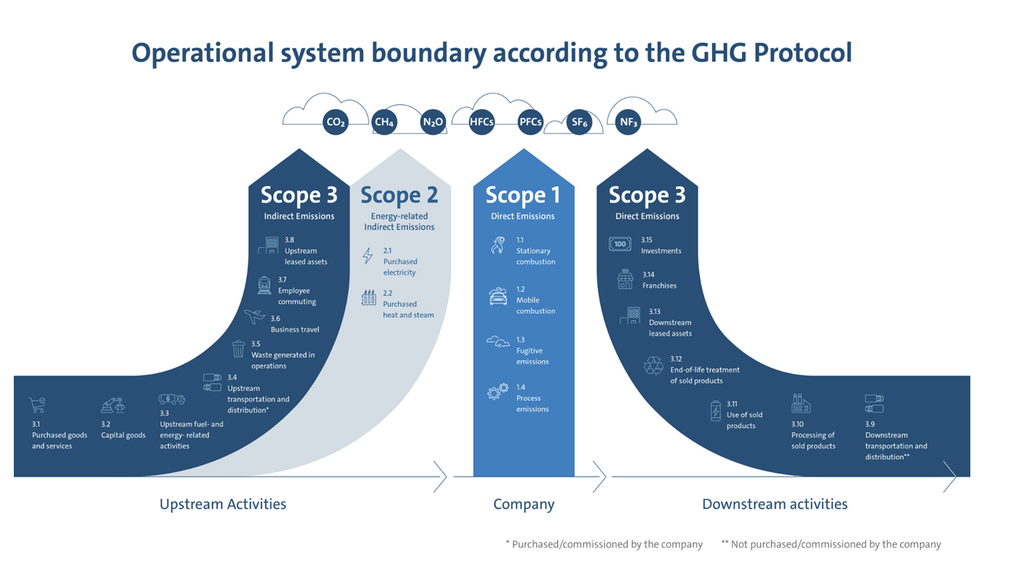
Most of a larger company’s footprint does not come from its own operations; this typically amounts to only 10% to 20% of a company’s impact. The rest comes from the companies it buys from. A big company can’t hit its targets by fixing only its own operations, therefore it passes the requirements down to its suppliers.
Now let’s look at it from the other side of the table from the perspective of the suppliers. To bid for their business, or to maintain their existing contracts, the suppliers have to show they align themselves with the corporation’s green initiatives. That means they now have to report their own emissions and have reduction targets. Suppliers that don’t report, or that have high emissions with no plan to bring them down, get passed over in the selection process.
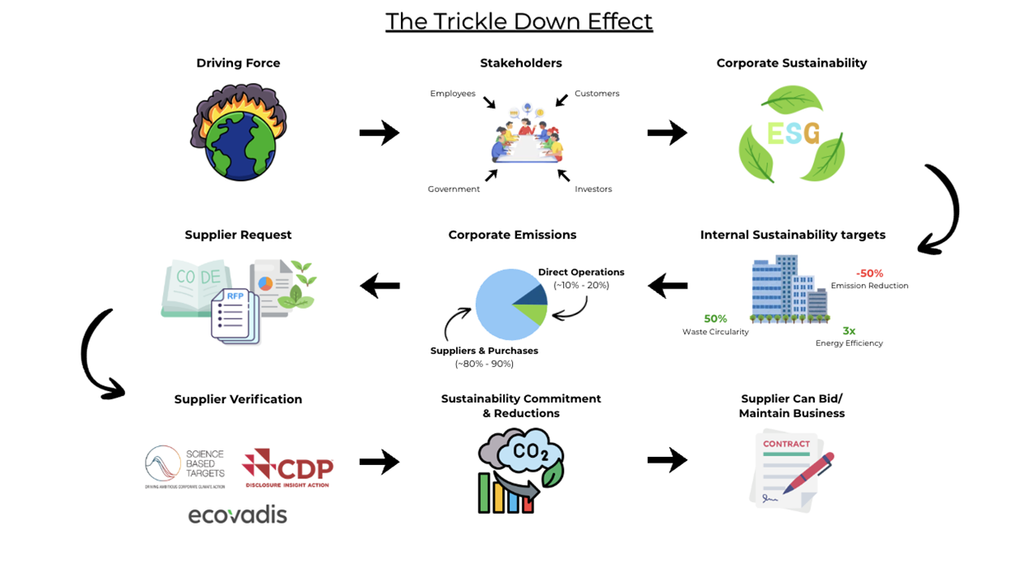
That is the sustainability trickle-down effect, and it’s one of the biggest drivers of sustainability today. It manifests in sustainability reports, RFPs (requests for proposals), supplier codes of conduct, and clauses in supplier contracts. In the past year alone, demand for sustainability measures has grown in North America, touching businesses of every size. Even if no regulator is watching you, a big customer’s requirements can still demand action, and when they do, the work stops being optional.
Now, the hard part: doing the work.
Corporate sustainability as a concept is always evolving, and there is rarely one clear way to achieve it. Every answer seems to open up three more questions, which is why it can feel like jumping down a rabbit hole. These five steps aren’t everything you could do, but they’re a strong place to start.
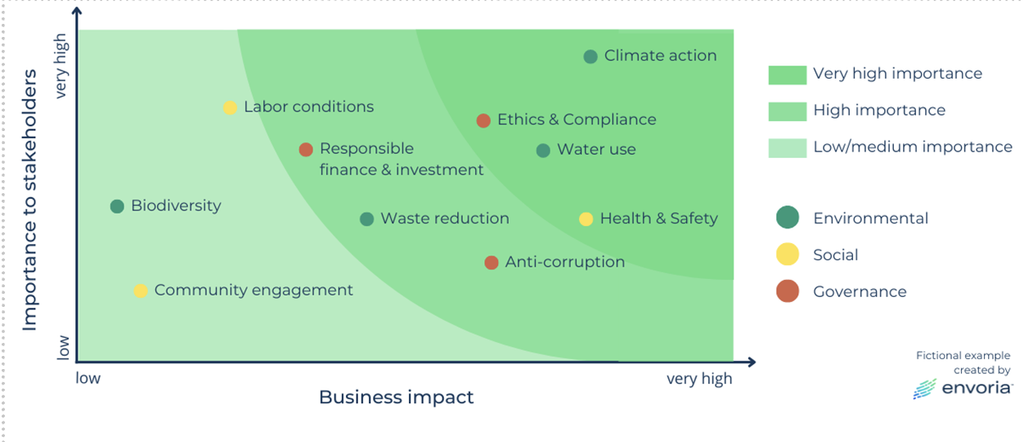
- Step 1: What is material? There are hundreds of sustainability topics, but they aren’t equally important to every business. A materiality assessment helps you find the ones that matter most to yours, based on your industry, size, location, and what your stakeholders care about most. A food brand might focus on packaging waste, while a staffing agency focuses on fair pay and worker well-being.
- Step 2: Collect your data. This process is both time-consuming and very data intensive. You’ll gather information across four areas: labour and human rights, ethics, environment, and supply chain. Calculating your emissions means digging through utility bills, financial records, and data from your own suppliers. It may not be glamorous, but it is how you can quantify your comprehensive footprint from your own operations, to everything you buy.
- Step 3: Set policies, baselines, and targets. Your data becomes your baseline, the starting line you measure progress against. From there, write the policies that guide how your business operates, and set targets for where you want to go. Many big customers expect those targets to be science-based, meaning that they are aligned with climate science, where global standard-setting and validation bodies can validate them. Policies only work if people know and use them; so train your whole team, especially the people involved in procurement.
- Step 4: Keep the proof. Numbers and targets are only part of the picture. Customers and rating platforms like EcoVadis also want proof of what you actually do. Document the real work behind the data: the energy-efficient equipment you’ve installed, the training you’ve run, the supplier checks you’ve completed. Collect the stories inside your business too, like the team who cut packaging waste, because they’ll give your report life later.
- Step 5: Tell your story, honestly. Now pull it all together into a sustainability report. It doesn’t need to be long or glossy, but it does need to be honest. It is tempting to show only the good news, but that’s greenwashing (making a company look greener than it really is). The strongest companies aren’t the ones with perfect records. A zero for incidents can mean “no problems” or more ominously “no way of noticing problems.” The companies that earn trust openly share their weak spots and demonstrate improvement.
The payoff: why it’s worth the effort
If this sounds like a lot of work on top of running your business, you’re right. It is. But beyond securing that big contract, the businesses that put in the effort get more back than they spend.
- Keep your people. Employees stay longer at companies they believe in, which means lower hiring and training costs.
- Earn trust. Customers prefer businesses they trust. Investors see lower risk. And a reputation for doing the right things means less chance of public backlash.
- Protect your bottom line. Energy efficiency and waste reduction cut operating costs directly. Policies that employees actually follow help you avoid violations, and that means a lower risk of fines, lawsuits, and legal bills.
- Prepare for what’s coming. Risk assessments show where floods, wildfires, heat, drought, or water shortages could hurt your business before they happen. Preparing costs far less than reacting to a shutdown.

Progress, Not Perfection
No business is perfectly sustainable, nor are they expected to be. What matters is setting clear targets, making steady progress, tracking results, and being honest about the gaps. Start with realistic goals, and build from there.
The traditional business model of maximizing profit for shareholders has not been thrown out. Rather, it has evolved into the triple bottom line: of people, profit and the planet. Can “doing good” also be good for business? For the businesses that do it well, the answer is a resounding “Yes”! And thankfully, there are always experts available to help.