Sustainable Finance for Canadian Agriculture
How can sustainable farming practices be recognized and rewarded? Justine Hendricks reflects on what she has heard from farmers, ranchers and producers since joining Farm Credit Canada, and on their interest in being part of the solution to climate change. Drawing on FCC’s work developing a sustainable finance framework for agriculture, Justine describes how the organization sought producer input and independent review, and how its Sustainability Capital Investment Program supports eligible on-farm investments. Justine makes the case that sustainability and profitability can go hand in hand, and that Canadian producers deserve recognition for the progress they have made.
When I joined Farm Credit Canada (FCC) as President and CEO, I was leaving Export Development Canada, as their first Chief Sustainability Officer. While there, I learned a lot about Canada, sustainability and the opportunity for a Crown Corporation to make a big impact. But it wasn’t until my first year as CEO at FCC where I had repeated conversations with farmers, ranchers, and producers who opened my eyes.
What I quickly learned was that Canada’s agriculture and food industry was not only already a climate leader, but producers were keen to be part of the solution to climate change. Canadian agriculture and food was a prime testing ground for what could be a massive sustainable finance opportunity. Even further, Canadian Ag and Food was on the cusp of a generational opportunity and sustainable production is a critical piece to unlocking it.
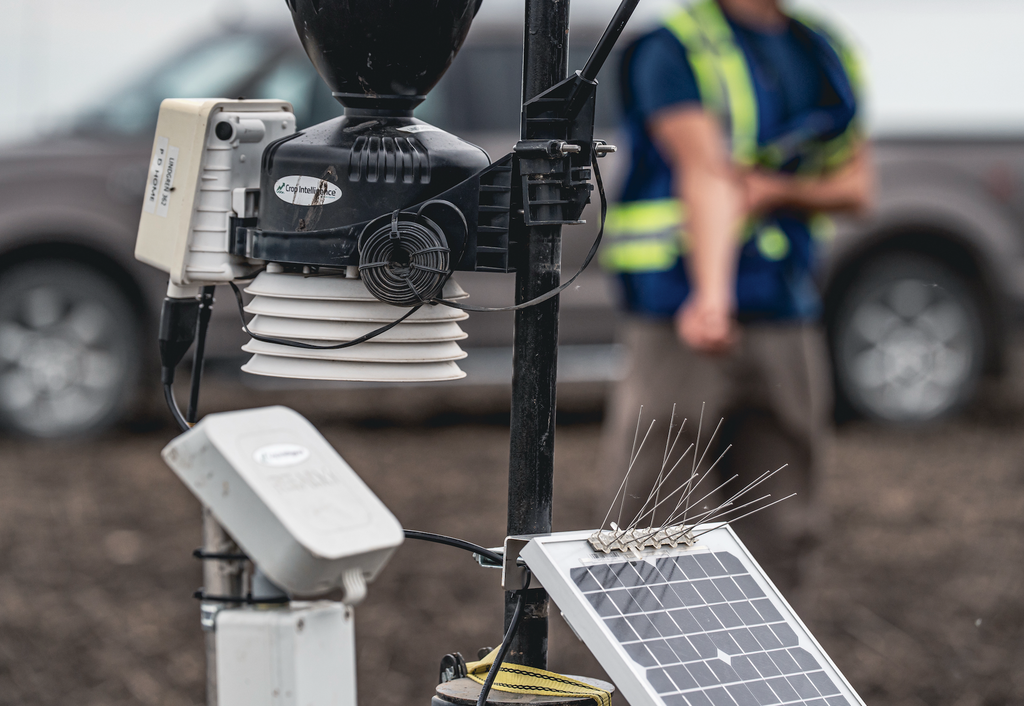
Allow me to repeat some data which many of you will already know. First, in order to meet the calorie needs of the world, food production needs to increase, not slow. FAO estimates are that globally, we will need to produce 50% more food by 2050 to feed our population. Second, farmland in the right growing conditions is in limited supply. Only a few countries have the weather, soil conditions, and land for growth. And third, there are food producers in the world who are concerned with land stewardship and emissions reduction. What I can tell you is that Canadian producers do care and are leaders. But we cannot build a credible approach to sustainable agriculture while ignoring the efforts of Canadian producers already underway.
I’ve sat at enough dinner tables across from third and fourth generation farmers to know that the land is their livelihood. The health of their ecosystem dictates everything. Their ability to adapt to changing weather is urgent. These are people who understand better than many of us about the link between nature and our ability to feed ourselves.
As FCC dug deeper into this topic, we started to have more in-depth conversations with our customers and the same questions kept coming up. “Why do our practices not receive the same credit from government, civil society, financial institutions, and international bodies, when compared to other industries?” We took this as a challenge. Can we “standardize” these practices, with third party accreditation. FCC already had a successful partnership program with Starbucks, Ducks Unlimited, PepsiCo, Cargill, McCain and Lactanet but this was about giving producers a road map to sustainability, and to formalize the practices they were already doing.
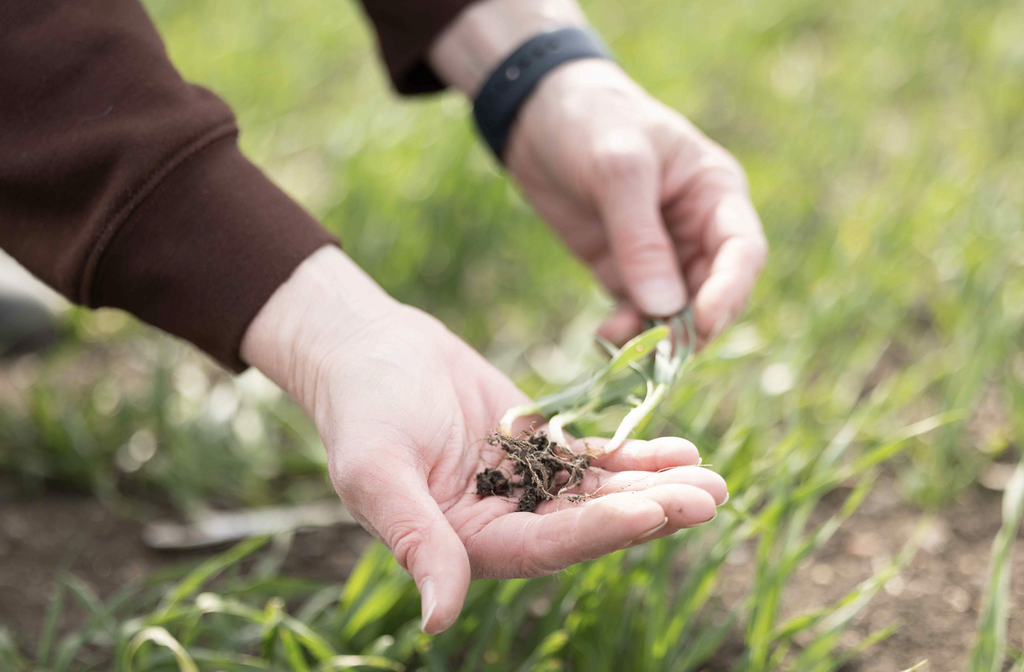
So in 2024, FCC developed the first ever sustainable finance framework (SFF) for agriculture. It came at a time we were being told that the sector was too diverse, too complex, or too diffuse to have a framework that captured enough sub-sectors, and rigorous enough to be meaningful. In the process of developing we sat down with as many Canadian producers as possible and asked, “Does this resonate with you? Does this make sense for your business and how you run your farm?”
The next piece of the puzzle was external credibility. It’s not enough for producers themselves and the industry around them to claim practices are sustainable. It needs to be validated if we want to address the longstanding (and valid) frustration from farmers, that their practices do not receive credit for moving the sustainability needle. So it was incumbent on FCC to seek out third party validation for our framework.
We also solicited science-based input from a credible environmental organization with long expertise in sustainable farming practices and asked Morningstar Sustainalytics to provide an independent second-party opinion. This external scrutiny mattered because it gave us an objective test of whether the framework was sufficiently rigorous to support credible sustainable finance in a sector as complex and diverse as agriculture and food.
But what we often forget is that by and large, Canadian farmers are small businesses. In fact, this is evidenced by FCC’s own $65B book of business. Nearly 65% of our loans are under $200,000 and a further 30% are between $200,000 and $1.5 million. For these farmers, the SFF means very little, unless we can show that sustainability and profitability aren’t in competition.
How do we build a product suite that helps reduce the environmental impact of agriculture practices, and rewards the action taken by farmers, while still being financially sustainable for a bank like ourselves? That was our challenge.
The good news is that sustainable practices in agriculture can create cost efficiencies, they can make the far more resilient to disaster, and in many cases, they can be low-tech. Let me give you an example.
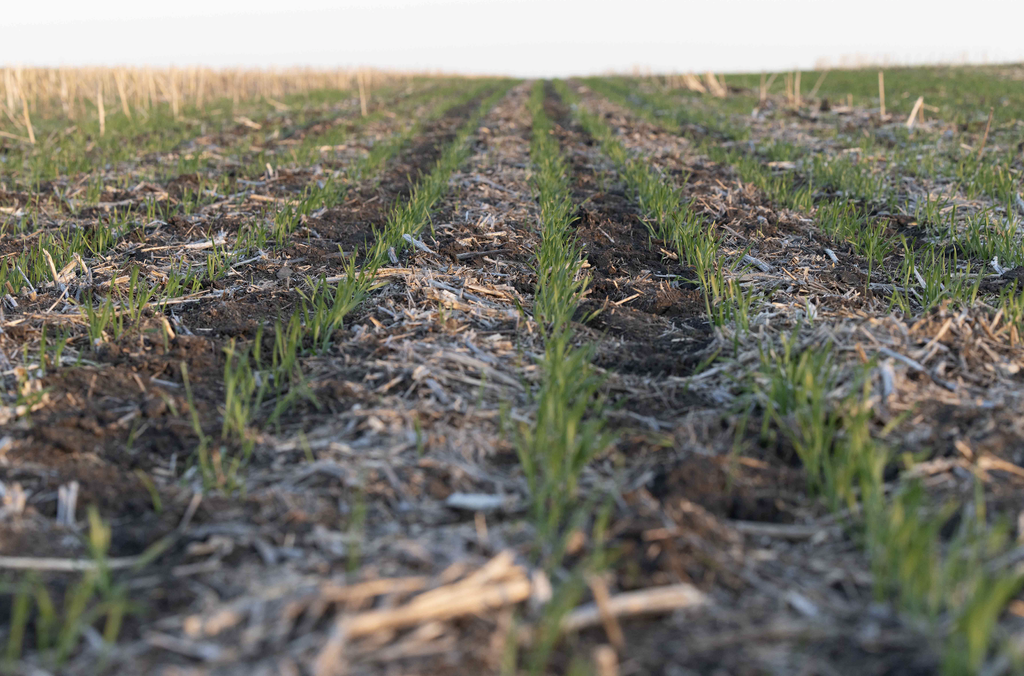
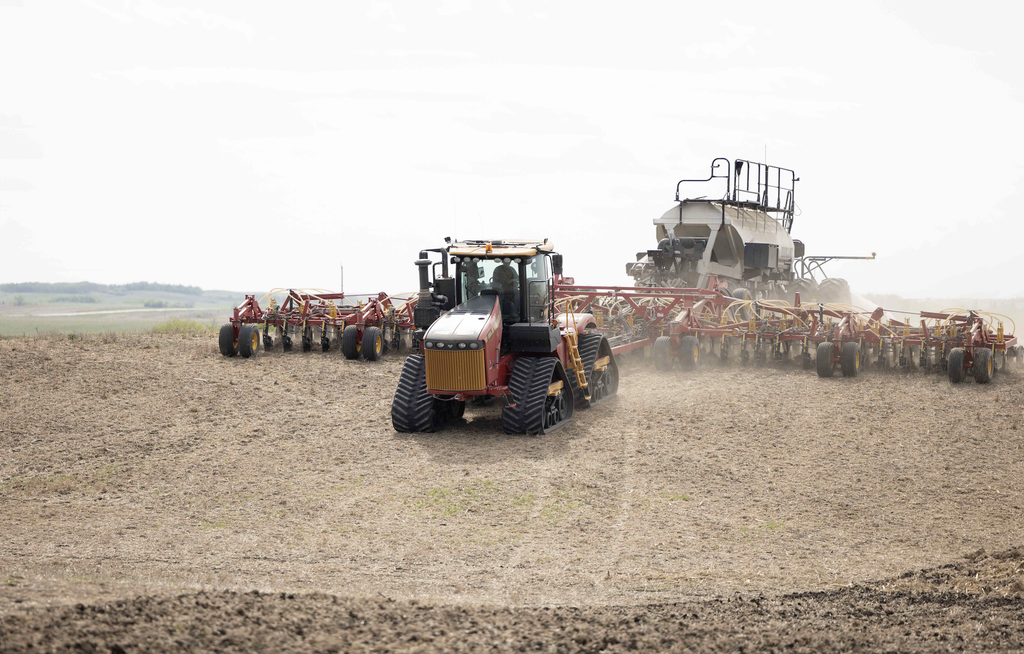
Saskatchewan is one of the world’s leading users of no-till seeding. In basic terms, what it means is that rather than plowing the field during seeding, air seeders or other tech are used to seed the soil without disturbing the topsoil. Why is this important? Well, researchers have learned over the decades that soil is actually a massive carbon sequestration tool, and when the soil is plowed, carbon is released into the atmosphere. When it is left unplowed, it stays beneath the topsoil and acts as a nutrient for growth. There is much debate about who pioneered no-till agriculture, but there is no debate about who perfected it. In the 1980s, about 2-3% of Saskatchewan farmers used this practice, fast forward to current day, where 93% of crop acres in Saskatchewan use conservation tillage or no-tillage practices. Canada is a leader in this practice and other countries are trying to catch up.
With no till, producers are enabled to use less fertilizer, less water, capture carbon, and use less fuel. So, you can see that what became clear to us at FCC is that sustainable practices, like no-till seeding, are actually good for us as a financial institution and good for the farmer as it lowers costs. If a customer can save money, use less, and in fact, produce more, why would we not reward that financially. From a straight business perspective, they are running a more efficient and resilient business, and as such, they should be rewarded from that. So, we set about creating a product suite that would reward it.
That thinking led us to create the Sustainability Capital Investment Program, or SCIP. The program is straightforward: when an existing FCC customer finances an eligible investment in equipment, technology or infrastructure that improves the environmental sustainability of their operation, FCC provides an annual incentive equal to 1% of the outstanding eligible loan principal for up to five years. The incentive applies only to the portion of the financing used for the eligible investment, and the project must go beyond standard practice and regulatory requirements.
For example, outfitting a greenhouse with LED bulbs. On of our customers, a 50-acres green house farm in Ontario, transitioned to LED lighting which typically has a 2-5 year timeline for return on investment. The company reported back to FCC that since implementing the new lighting, electricity costs decreased by 40%, and yields increased by 10% while crop quality and working conditions improved as well. Rather than asking producers to choose between sustainability and financial viability, we designed an approach intended to advance both.
This is just one example, but the common principle across all we’ve done is that sustainability cannot be something imposed on producers from the outside. It has to make sense within the economics and realities of their operations, and producers should receive tangible value when they deliver outcomes that benefit the broader food system.
Canadians have much to be proud of when it comes to agriculture. Generations of farmers have pioneered innovative practices that have made our country a global leader in sustainable food production. Yet, too few Canadians appreciate just how far we’ve come. Is our system perfect? Of course not. But the results speak for themselves. A recent study from UBC Okanagan found that Canadian wheat, canola and peas have some of the lowest carbon footprints in the world—so low that, in some cases, these crops could be shipped to Europe 17 times before producing the same emissions as equivalent crops grown there.¹
That’s a remarkable achievement, and one that deserves greater recognition. As the world confronts the challenge of feeding a growing population while reducing its environmental footprint, Canada has an opportunity to do more than simply lead by example. We can help set the standard for how the world produces food, more efficiently, more sustainably, and at the scale the future demands. Canada must rise as the food hero the world needs: guided by the care to nourish, the ingenuity to transform and the creativity to lead.