The Impetus for Climate Transition Planning

As scrutiny of corporate climate claims grows, Eleanor Eden argues that Canadian companies can no longer rely on ambitious emissions targets alone and must instead produce credible climate transition plans that show how those goals will actually be achieved. She presents transition planning as the bridge between high-level commitments and concrete implementation: integrating emissions analysis, climate risk, governance, financial trade-offs, and operational decision-making into a coherent business strategy. While many major Canadian firms have set Paris-aligned targets, Eden notes that far fewer have articulated meaningful actions to deliver on them, creating a widening credibility gap. In response, she makes the case that robust transition plans can help firms move beyond greenwashing risk, align climate ambition with core business priorities, build internal accountability, and strengthen long-term resilience in an increasingly uncertain and regulated environment.
As climate change accelerates, companies need to act to reduce their greenhouse gas (GHG) emissions and demonstrate their resilience against escalating extreme weather events. A large focus of corporate climate action has been setting ambitious, science-based targets to reduce GHG emissions, but less work has been done to translate those targets into concrete actions to achieve them. Increased pressure against greenwashing, driven by heightened consumer skepticism and awareness and increased regulatory scrutiny,[1] means that the burden of proof now falls to companies to demonstrate they have a credible strategy to achieve their goals.
Enter climate transition plans. Put simply, a climate transition plan is part of a company’s overall strategy outlining its targets, actions, and resources for moving towards a lower-carbon economy. Climate transition planning is the process used by companies to bridge the gap between simply setting high-level climate goals and developing targeted and robust implementation strategies. Now widely adopted globally, increasingly required by regulators[2], and gaining prevalence in Canada, climate transition plans help companies bring together existing climate work across areas such as risk management, GHG quantification, green products etc., into a comprehensive strategy that is focused, balanced and aligned with the needs of the business.
This article sets the context for climate transition planning in Canada, explores the main building blocks and recommends some steps to get started and overcome key challenges along the way.
Corporate Canada’s climate progress
Climate targets have become increasingly common since the creation of the Science-Based Targets initiative (SBTi) in 2015. As of 2025, around two-thirds of the largest Canadian companies (TSX60) had set and disclosed GHG emissions targets, of which 89% were aligned with the goals of the Paris Agreement.
While momentum is generally positive, evidence suggests that some companies are now scaling back their climate ambition. Several companies have removed public climate commitments altogether[3] while others have recalibrated existing targets[4] —publicly recognizing that their previously-set targets are (and perhaps always were) unachievable.
This is unsurprising: only half of Canadian TSX60 companies with targets publish more than one action to achieve these, representing a significant gap between having goals and understanding how these will be achieved.[5] Indeed, many companies that have had targets in place for several years are now at a ‘rubber meets the road’ moment. Pressure is mounting to clearly communicate progress to date and articulate future expectations for how these targets will be achieved, and which actions and levers will drive delivery.
Climate transition planning in practice
- Understand climate exposure: build a robust understanding of the material drivers of the company’s greenhouse gas (GHG) emissions footprint, and exposure to climate-related risks and opportunities across its operations. This can be achieved through a GHG inventory, climate risk assessment, and scenario analysis exercise.
- Define strategic ambition: set GHG emissions targets and other climate goals (e.g. related to renewable energy, sustainable finance, and resilience). This allows the company to ground the plan in opportunities that reflect both existing internal strengths, economic trends, and the company’s broader strategic focus.
- Establish governance: Define roles, responsibilities, and governance practices for building and operationalizing the plan. This includes establishing committees, working groups, accountable business leads, and escalation pathways, as well as setting out an action plan with key milestones to drive progress.
- Understand levers, actions and their impacts: Build a picture of what actions need to be taken and who to involve, understand the trade-offs associated with different levers and actions, and evaluate the business impacts and financial implications.
- Engage and educate: Provide leadership training, encourage cross-functional collaboration and conduct targeted external engagement to gain buy-in and ensure appropriate validation of plan assumptions. Publicly disclose the plan to ensure credibility and transparency for a broader range of external stakeholders.
These building blocks leverage a wide range of existing standards, frameworks and tools. The Transition Planning Taskforce framework – globally recognized as the gold standard for climate transition planning – is part of the IFRS Sustainability Standards suite, and there is considerable alignment with this framework and the IFRS S2 standard on climate-related disclosures. In Canada, the Business Future Pathways initiative has been established to provide practical and investor-endorsed guidance to support Canadian companies in developing credible climate transition plans. This means companies do not need to ‘reinvent the wheel’ but rather build on previous work and channel efforts into shaping a coherent long-term transformation strategy.
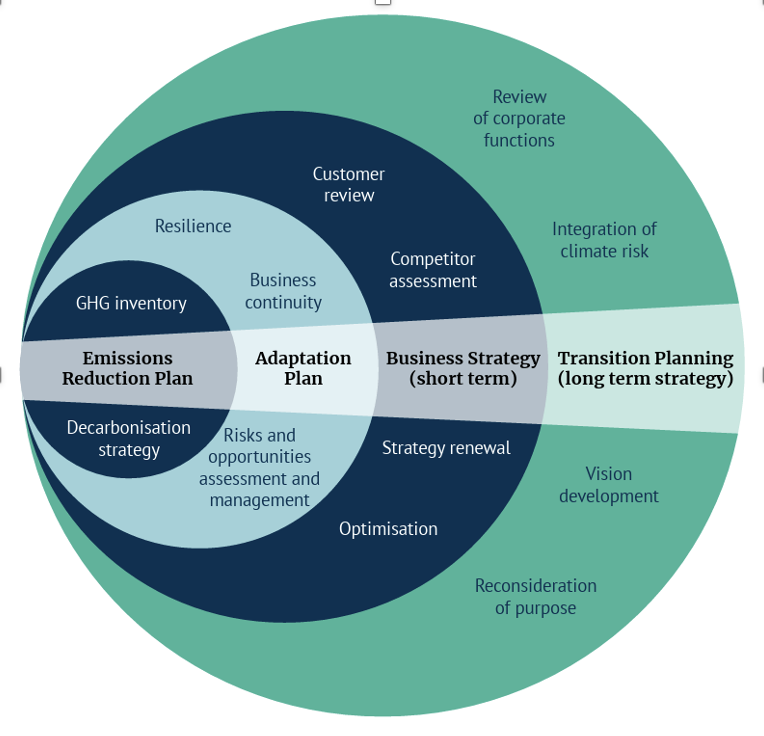
Fig 1: Typical climate planning tools and processes
How to get started
Climate transition planning requires cross-functional collaboration, long-term decision-making in the face of uncertainty, and integration into core business strategy. It also requires organizations to simultaneously address technical, financial, operational, and cultural challenges.
The following tips can help sustainability practitioners steer organizations toward effective climate transition planning:
Frame climate transition planning not just as a compliance exercise, but as a critical step in your company’s sustainability journey, an opportunity to own your climate narrative, and a helpful process that will allow senior executives from across the organization to shape the approach to climate in a way that takes the needs of the business into account.
Because an effective climate strategy often requires rethinking how the organization operates, a climate transition plan can amount to a significant change-management effort. Take the time to foster relationships and create space for debate and challenge. Create buy-in by ensuring that each lever of action is assigned to an appropriate ‘owner’ and supported by a working group with the range of expertise required to assess feasibility and shape the approach.
Take into consideration the variances that exist, both across Canada and internationally, as regions differ in resource reliance, regulation and policy support. Be transparent about the trade-offs that will inevitably exist when making decisions about strategy and capital allocation. To be successful, a credible transition plan should consider how to meet customers and suppliers where they are at, while supporting transformation and innovation.
Done right, climate transition planning can be a powerful strategic tool that aligns business goals with climate ambitions, drives action and innovation, builds stakeholder trust, and positions the organization for long-term resilience.

Endnotes:
[1] Greenwashing is the practice of using marketing and advertising to make brands appear more sustainable than they really are. The emergence of Bill C-59, anti-greenwashing legislation passed in Canada in 2025 that requires evidence-based claims to corporate action on climate, has placed into sharper focus the number of organizations with claims to climate action that cannot be substantiated.
[2] For example, the Office of the Superintendent of Financial Institutions (OSFI) requires federally regulated Canadian financial institutions to develop and disclose a Climate Transition Plan as part of its B-15 Guidance on Climate Risk Management.
[3] Analysis from 440Mt suggests there has been a 5% decrease in public corporate targets since 2024, driven largely driven by the withdrawal of net zero targets by oil sands companies following the launch of the Canadian Competition Act (Bill C-59).
[4] High-profile examples of this have been in the oil and gas and financial services sectors, especially in the US, where regulatory pressure has eased and sentiment on sustainability has shifted.
[5] https://440megatonnes.ca/insight/most-of-canada-s-largest-companies-remain-committed-to-net-zero/