Two Canadian District Energy Utilities Recognized at the 9th Global District Energy Climate Awards Ceremony held on February 20, 2026 in Washington, DC

Amid so much climate fatigue, its important to be reminded that progress is not only possible but already underway. Bruce Ander highlights a set of district energy projects that cut through the usual cynicism by showing what decarbonization looks like when it is built, scaled, and operating in the real world. Drawing on examples recognized at the Global District Energy Climate Awards, he argues that low-carbon heating and cooling systems are delivering concrete gains in emissions reduction, resilience, and affordability across multiple countries. With particular attention to Canadian winners in Toronto and Markham, Bruce presents district energy as a practical and increasingly ambitious part of the climate transition.
Proof That Climate Solutions Are Already Working
In times of war, tariffs and changing climate policy, there can also be stories to encourage and give us hope. Hearing the many Clean50 stories and achievements is a source of encouragement for me. Here is my story from the past month. I had the great pleasure of attending the IDEA’s (International District Energy Association) recent conference held in Washington DC in February. IDEA’s 39th Annual Campus Energy Conference hosted over 1300 delegates and 252 trade show exhibitors from 16 countries to share and celebrate low carbon energy projects, strategies and technologies from around the world.
The conference also hosted a very special event – the 9th Global District Energy Climate Awards (GDECA) that recognizes cities, communities, and campuses worldwide for excellence in sustainable heating and cooling solutions. The GDECA is supported by the International Energy Agency (IEA), the UN Environment Programme, Asia Pacific Urban Energy Association (APUEA), Euroheat & Power and the IDEA.
GDECA was first launched as a biennial event in 2009 at an event in Copenhagen, Denmark. Project submissions are adjudicated in various categories including modernization, sector coupling, and in emerging markets. At the 2026 awards ceremony nine companies were recognized with innovative and leading projects located in Finland, the Netherlands, India, Estonia, Italy, Spain, and certainly our focus, Canada.
To summarize the GDECA purpose, here is the IDEA’s quote from the event’s media release:
“The Global District Energy Climate Awards shine a spotlight on practical, proven projects that help communities reduce emissions while improving energy resilience, infrastructure, and long-term affordability,” said Rob Thornton, President and CEO of IDEA. “These winners demonstrate how modern thermal networks can integrate new technologies with low-carbon resources and how quickly those solutions can be replicated when organizations collaborate.”
Adding to this message was a quote from the GDECA:
“The Global District Energy Climate Awards represent a powerful example of international collaboration for a more sustainable future, which is much needed in our fragmented world,” said Aksana Krasatsenka, Knowledge Transfer Director at Euroheat & Power and GDECA coordinator. “It is inspiring to see winners from across the globe—from North America to Europe and Asia—leading on the heat transition and climate action.”
Before we focus on Canada, here are three award winners of note:
Finland
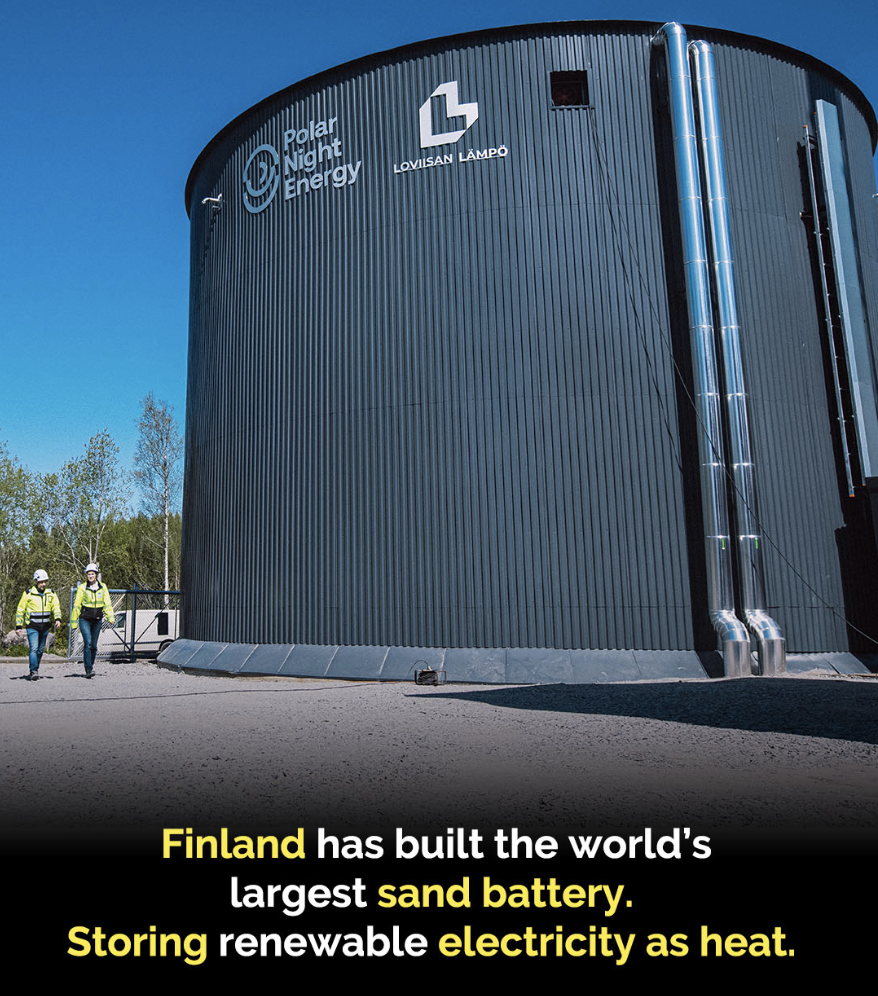
The Kankaanpää District Heating Network Modernization project in Kankaanpää, Finland demonstrated key advancements include Finland’s first digital twin platform, the world’s first sand battery, and new e-boilers and heat buffers. This district heating network covered 100% of the city’s heating market with a delivery reliability of 99.94% in 2024. The area saw a 72% reduction in carbon emissions achieved between 2019 and 2024.
Estonia
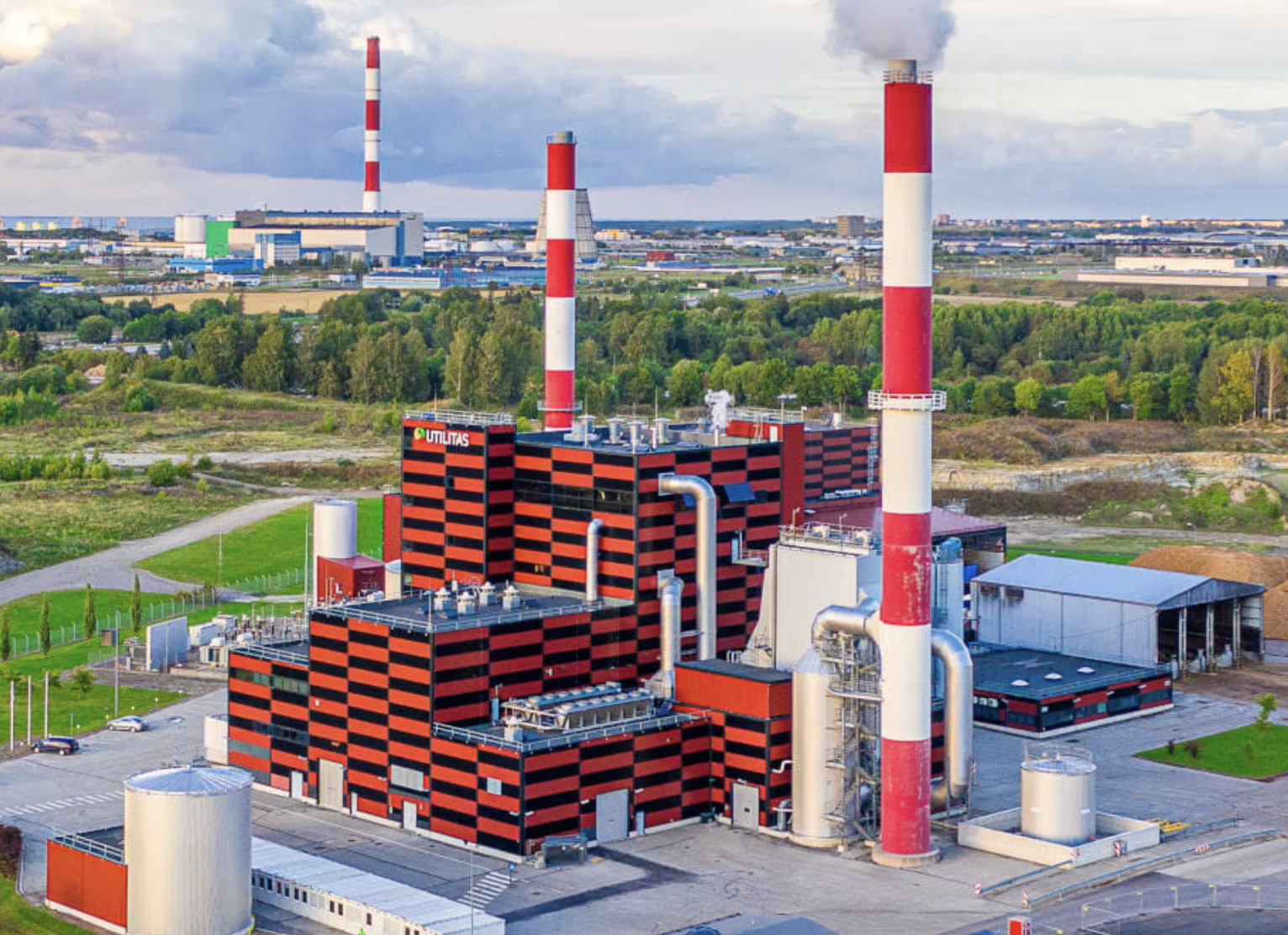
Utilitas is the district energy utility serving the city of Tallinn. The primary heat source in Tallinn is a biomass combined heat and power (CHP) plant that uses waste wood from local forestry operations to reduce dependence on natural gas during peak demand periods. Utilitas commissioned a 24 MW heat pump that recovers waste heat from the CHP plant’s flue gas and can be fed directly into the district heating network. The heat pump is powered by electricity from renewable sources, resulting in zero CO₂ emissions during operation. This innovative solution reduces annual gas consumption by 13.5 million m³, cuts CO₂ emissions by approximately 20,000 tonnes per year and lowers the overall cost of heat production. The system recovers 18 MW of heat from the flue gas while simultaneously condensing the moisture it contains.
Italy
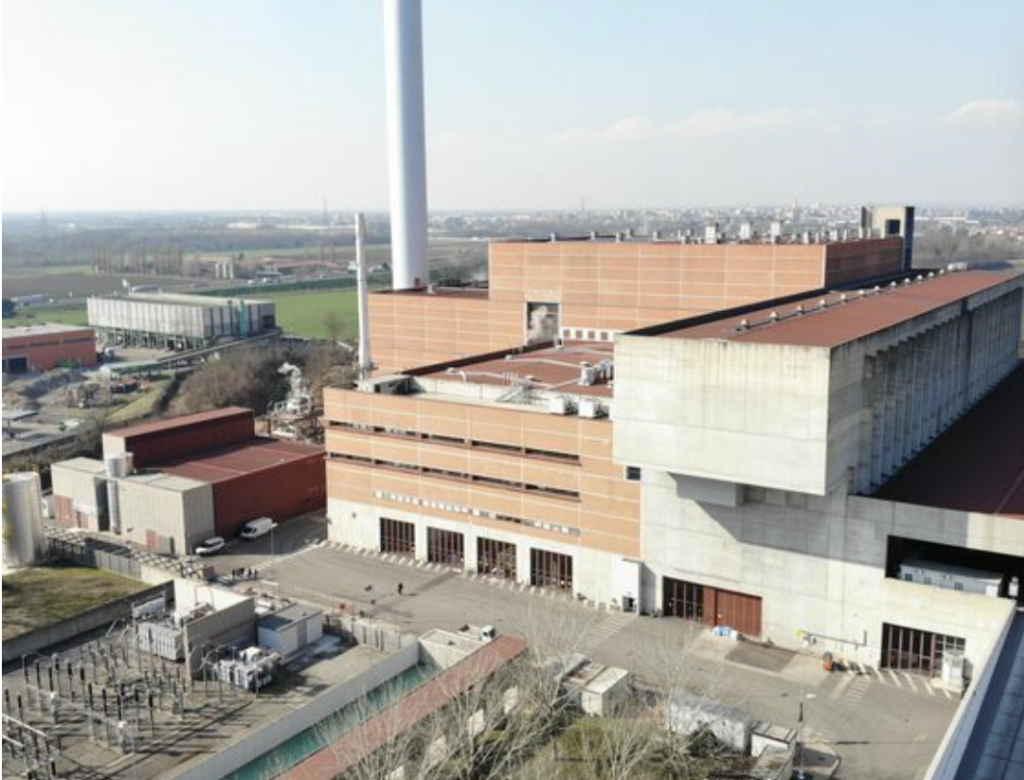
A2A manages the district heating system in Brescia, Italy providing heat to 20,500 substations across residential, commercial, industrial, and public sectors. The utility’s decarbonization journey has included the installation of heat pumps, thermal energy storage (TES), and a PV system. In June 2025, the utility inaugurated its first waste-heat recovery system from the data center. In 2024, the district heating system utilized 17% natural gas, of which 12% was from highly efficient cogeneration and 83% non-fossil fuels. Compared to 2016 baseline, CO₂ emissions decreased by 73%, NOx emissions by 92%, and SO2 emissions by 100%.
And the Canadian winners are …
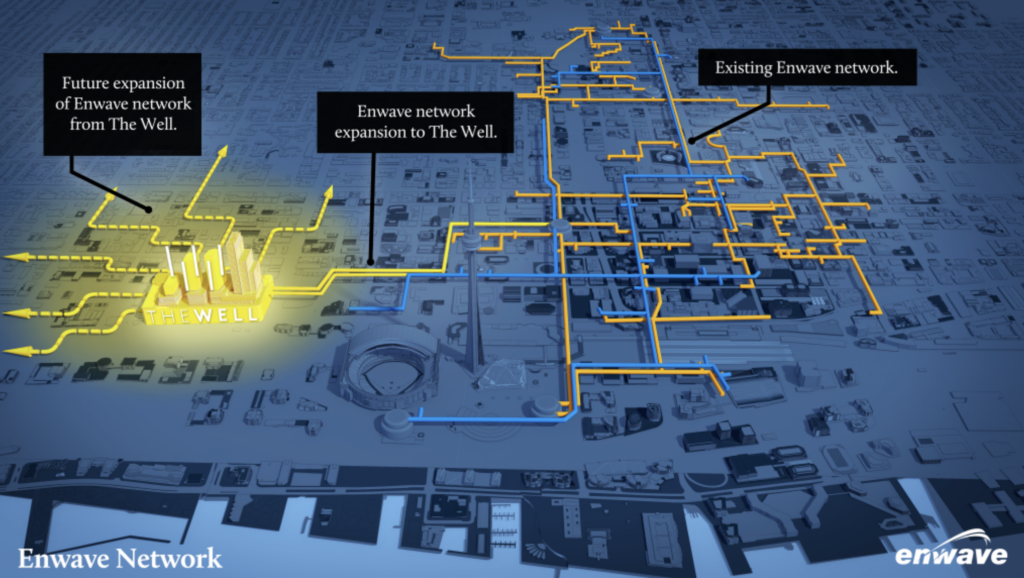
Enwave, Toronto
The Well Project
Enwave owns and operates numerous district energy platforms including the system serving the downtown core in Toronto; the largest district energy system in Canada.
The Well is a major mixed-use development featuring an 8-million-liter Thermal Energy Storage (TES) tank located below a parking structure. The TES acts as a thermal battery, charging at night during low demand and discharging during the day to reduce the strain on Toronto’s congested electrical grid. The Well is connected to Enwave’s hot water distribution network which is incorporating an increasing number of low-carbon generating assets to provide low-carbon hot water to Enwave customers with net-zero aspirations.
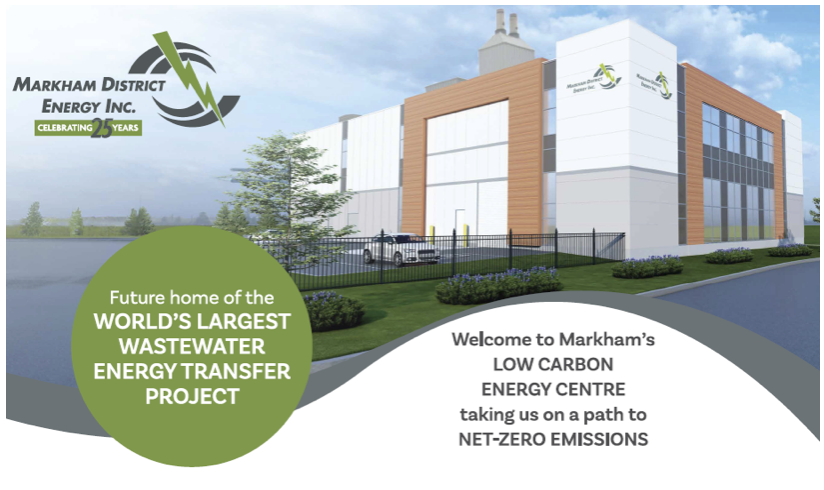
Markham District Energy
World’s Largest Wastewater Energy Transfer (WET) Project
Markham District Energy (MDE) has consistently invested in sector coupling assets to increase production efficiency, reduce emissions, and enhance system flexibility and operational redundancy. All buildings constructed in the city’s two urban centers are connected to district energy. In addition to hot water thermal storage, absorption cooling technology, and dual fuel assets, Markham’s largest sector coupling investment from 2000 to 2014 was its 12 MW natural gas fuelled combined heat & power fleet (CHP). It continued to accelerate its low carbon investments with two heat pump investments including an innovative 31.45 MW Wastewater Energy Transfer (WET) plant to integrate thermal energy recovery from a large York Region sewer main, the largest project of its type in the world.

WET produces 17.75 MW of low carbon hot water thermal energy and will also produce 3,600 tons of cooling energy capacity resulting in annual water conservation exceeding 130,000 M³ or 34M US gallons. With high efficiency heat pump technology, WET will reduce future GHG emissions by over 30,000 tonnes annually when the plant is fully utilized. This will be MDE’s largest step forward to date in achieving its 2050 net zero objective.
One footnote on the claim that this is the world’s largest WET project. This was MDE’s understanding when the project broke ground in 2024. At the recent IDEA conference, an engineering group reacted and reported that a similar project in Finland may be larger. MDE is studying this claim but in the end, this is not a contest but rather “represents a powerful example of international collaboration for a more sustainable future” as lifted from the earlier GDECA quote.
International District Energy Association is a Clean50 Sponsor.