“Canada will be an Energy Super Power” But What Kind? Canada Can Choose .
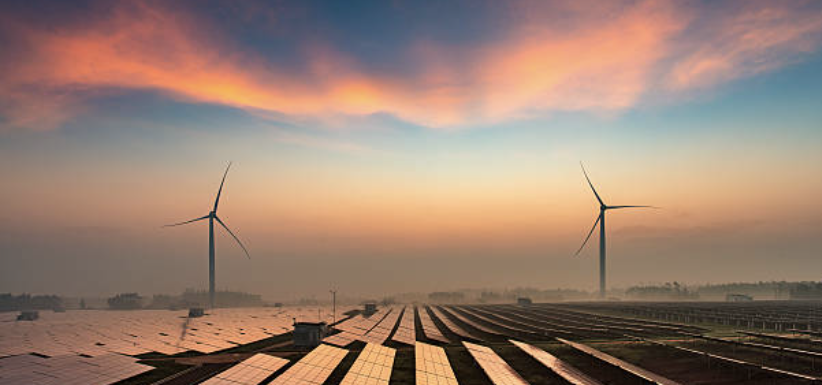

The line “As you wish”, synonymous with “The Princess Bride” movie of nearly 40 years ago, perfectly captures Canada’s choice, right now. That choice? Becoming an actually clean energy super power – or continuing to double down on still more fossil fuel development.
One might think that a report from The Lancet, the most-respected medical journal in the world, which earlier this week stated that an estimated 4,000 Canadians had died each year between 2021 and 2025 due to the impacts of wildfire smoke would tilt our choice in favour of “clean”. Especially, as this series has amply catalogued, Canada has more than sufficient resources to choose to go exclusively in the “clean” direction and start to catch up to the rest of the G7 while meeting not only our own energy needs – but more than enough to drive substantial exports of electricity to a willing set of consumers in the USA.
But ultimately, the Prime Minister has chosen to double down on fossil fuels as the leading priority, going so far as to use two omnibus bills to give his Cabinet “super powers” to wipe out any environmental law or other protections that stand in their way, and force Canadian taxpayers to borrow 45 billion dollars to gift to the wealthiest corporations on the planet, whilst simultaneously ignoring laws that were to limit our coal exports.
We note that while the Poilievre Conservatives decry our deficit and the borrowing costs inflicted upon Canadian taxpayers, they are completely silent and seemingly fine with bumping that deficit 70% if oil companies reap the benefit.
Lawsuits fighting the omnibus bill measures will surely follow. And Canadians, while supportive of the pipelines are adamantly opposed to paying for it. Even 61% of Albertans oppose taxpayers building the pipeline! (polling here)
But where are we now? And what’s next?
On August 17, 2026, Canada took a big step toward a renewable future. On October 1st, it took an even bigger step back.
The step forward? The federal government announced a large investment in renewable energy development destined for Newfoundland and Labrador, which had signed an agreement with Quebec. The investment intends to spark thousands of megawatts by expanding the Churchill Falls generating station, developing hydro in Gull Island, and onshore wind alongside iron ore mining, “a strategic asset for low-carbon steel supply”.
But the agreement between NL and Quebec is not yet binding and now depends on the newly elected Parti Québécois minority government to make it so before the deal expires in March 2027. NL Premier Tony Wakeham is optimistic that the new Quebec government will accept and progress the agreement; for now, we will have to wait and see.
Meanwhile, in the west, the future of the energy transition is looking increasingly bleak. Carney’s government is going to infuriating lengths to shield a sunsetting fossil fuel industry, sinking money into expensive projects that are set to cement Canada’s retreat from an energy transition.
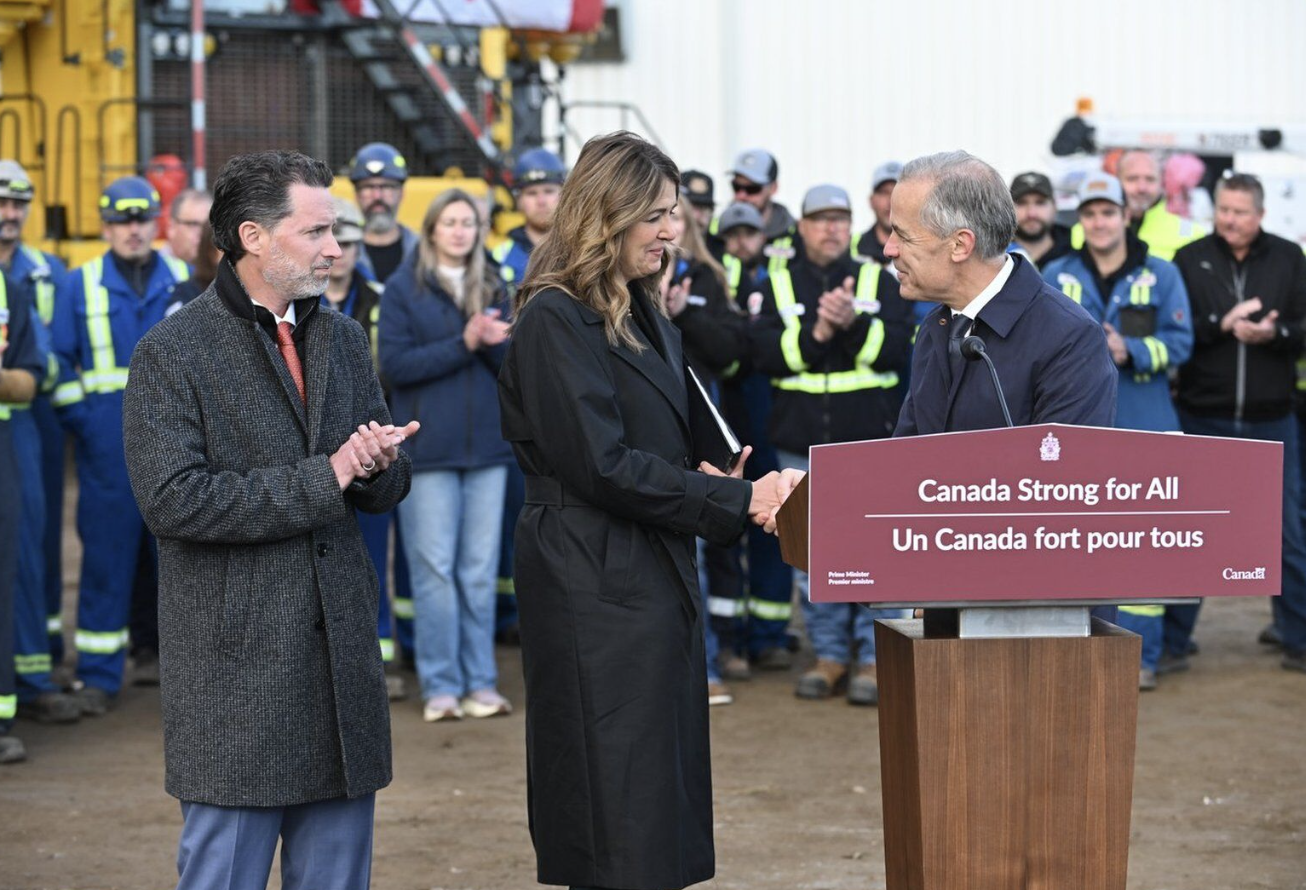
On the day after the National Day for Truth and Reconciliation, Carney stood alongside Alberta Premier Danielle Smith to announce his government’s official designation of the project as first in line for the national interest. Clearly, its development is unachievable without government funding and majority government ownership. Its permitting and construction will be fast-tracked, bound to step over environmental concerns and threaten Indigenous rights.
The Pacific Link Pipeline’s proposed route (pictured below) has sparked concern among First Nations as federal and provincial consultation with these nations has been embarrassingly weak (read more in this APTN article). Regardless of how much “care” the pipeline developers will take with its construction, it is set to run along sensitive rivers, food and water sources. The project is sure to disturb the land, people’s livelihoods and its subsequent port expansions to drive the extinction of southern resident killer whales.
The Pacific Link Pipeline will increase the risk to climate, environmental and Indigenous rights, all in the name of wooing oil lobbyists like Premier Smith and foreign-owned fossil fuel companies, derisking private investment and ensuring the wealth never reaches our pockets. The project being the first officially designated as a project of the national interest is telling of what’s to come.
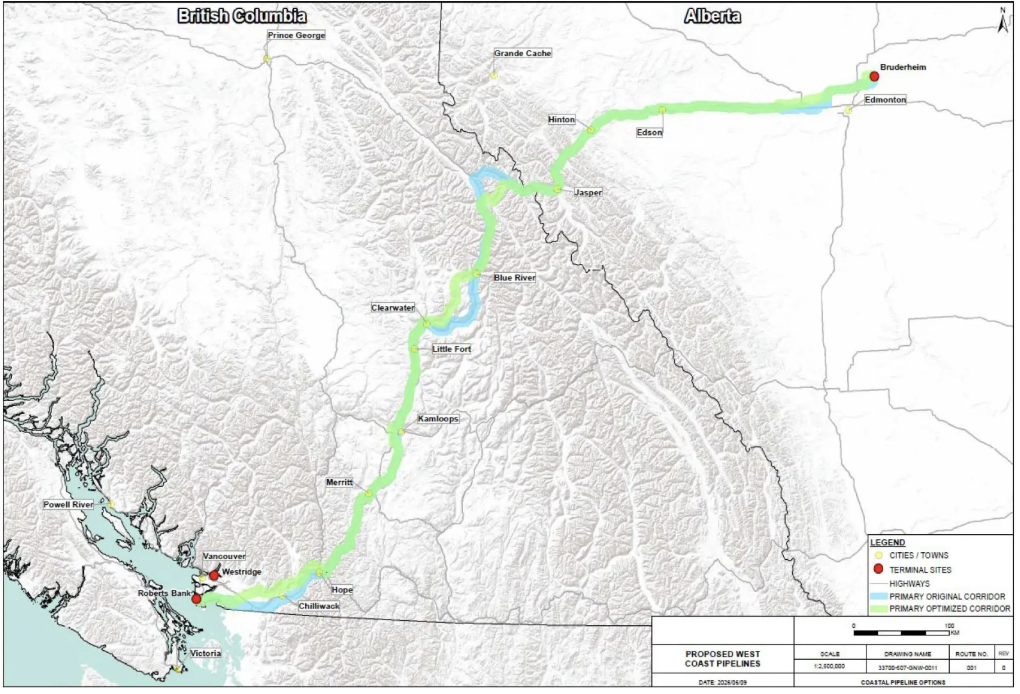
The ~1,200 km pipeline is bound for the Pacific Ocean, ready to deliver crude oil to Asia. This project and expansions to LNG exports are set to sell off Canadian resources to Asia’s energy transition and further shield Canada from economic instability brought by the US.
But energy transitions are temporary, and when complete, Asia will have reinvented its energy systems, leaving us with our outdated infrastructure, grovelling for renewable energy technology that their continent is skilled at manufacturing.
Asia’s decarbonization and renewables boom is a significant looming risk to Canada’s LNG and oil export strategy. China and India are shifting rapidly to renewables, and are the very markets our new pipelines and infrastructure are meant to serve. It is essentially the equivalent of Canada deciding in 1910 to double down on building more horse-pulled buggies during the onset of automobiles.
What will happen to all our fossil fuel investments when our customers abandon us for cheaper, cleaner, and locally manufactured alternatives? Notably, industry is not driving the development of the Canadian pipelines and LNG infrastructure, and no matter how much the government sinks into these projects, industry will avoid putting its eggs in this basket so as not to be left in the dust with the rest of us.
Welcome to the resource trap, an economic pattern that traps Canada in a cycle of exporting low-value raw resources to other countries that will then add value to the goods and reap real economic gains. The pattern is not new to Canada; our governments tend to lead us back deeper into this cycle whenever economic uncertainty increases (think the Keystone XL pipeline first proposed in 2008).
Where are we now with renewables?
As of 2025, 9.7% of Canada’s energy demand was met by non-hydro renewables and provinces like Quebec, Ontario, BC, Nova Scotia, and even Alberta are set to continue their proliferation. According to CanREA (Canadian Renewable Energy Association) , solar, wind and energy storage are underway to double in Canada by 2035. And according to the federal government, “Wind projects lead Canada’s planned power additions with 6,206 MW of new wind by 2030,” and for solar, 2,337 MW are planned within the same timeframe.
For context, Manitoba and Saskatchewan both have a current total power generation capacity of ~6,100 MW, and Nova Scotia’s is ~2,700 MW.
This increased renewables capacity can be deployed to support their transition away from fossil fuels, but for provinces like Quebec and BC (two already clean grids), these projects are primarily commissioned to keep up with growing demand.
Where is everyone else with renewables?
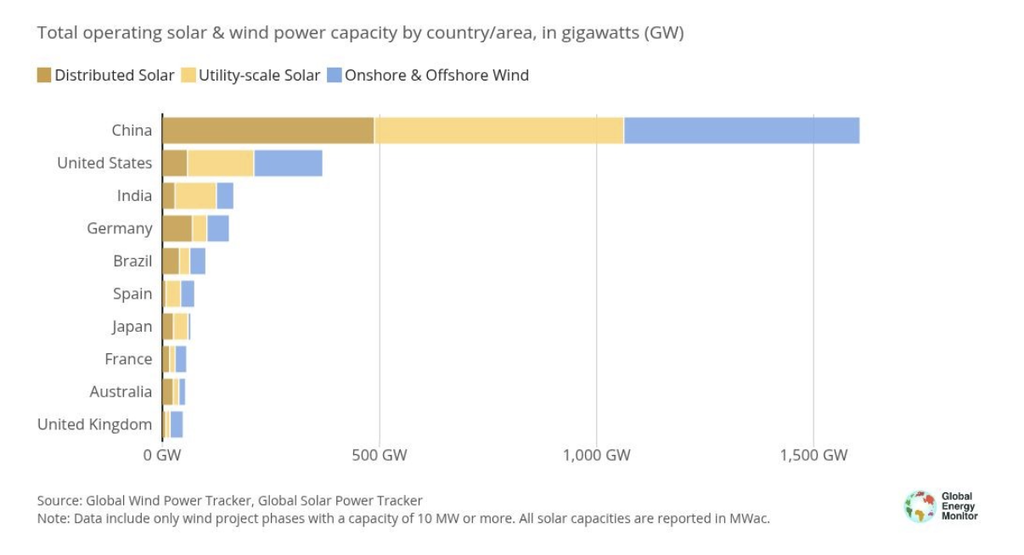
Out of every member country in the G7 (Canada, France, Germany, Italy, Japan, UK, US), Canada ranks last in terms of solar and wind energy capacity. Particularly disappointing when one considers that Canada’s landmass, and therefore generating capacity, is over 5 times larger than France, Germany, Italy, Japan, and the UK – combined!
Globally, in October of 2025, renewable energy generation surpassed coal; in March of 2026, solar and wind generated more electricity than natural gas; and in April, solar power crossed the 3 TW threshold. Meanwhile, Canada is setting up for one last oil and gas hurrah.
The leaders of the renewable energy revolution are China and India. Benefiting from the now cheapest, quickest-to-deploy energy resources and manufacturing the technology sold to the rest of the world (85% of panels manufactured in China).
China hosts three times more operating wind & solar than the United States and India combined
So how do we catch up?
Well, the most obvious play would be to stop refurbishing, investing in and developing new gas and coal power plants (looking at you, Saskatchewan) and oil pipelines and redirect resources to renewable energy projects and the electrical infrastructure that connects them (i.e. transmission lines). This largely falls under the provinces, as they have exclusive constitutional jurisdiction over the development, conservation and management of sites and facilities… for the generation and production of electrical energy.
However, as stated by the Canadian Climate Institute (CCI), the proliferation of renewables will depend on the federal government and its support of interprovincial electricity planning, funding and de-risking projects for private investors and the evolution of regulatory schemes to streamline projects (without steamrolling environmental guardrails and Indigenous rights) and support national grid decarbonization.
Regulatory upgrades
Consistent across all 6 core articles in our Renewables Own the Future series, developers and industry professionals acknowledge the need for regulatory reform to catch up and eventually get ahead of global energy development trends. Solar, wind and battery storage have all experienced monumental cost decreases that have resulted in a global boom in their adoption. Canada can also reap the benefits from this market trend, but, according to a 2026 CCI report, “electricity infrastructure, markets, and policies are heavily regulated and optimized for yesterday’s technologies, which leaves Canada vulnerable to missing out on the full scope of investment opportunities ahead”. David Timm, Partner at Sussex Strategy Group, representatives from FORCE (Fundy Ocean Research Centre for Energy), and Matt Harper, President of Invinity Energy Systems, agree. These folks, among others, were significant contributors to our article series and emphasized the need to evolve existing federal and provincial energy regulation to better reflect modern energy grids.
Transmission and grid infrastructure
Electricity transmission infrastructure development will be essential alongside the growth of renewables and battery storage. The electricity generated from dispersed (often rural) sites will need somewhere to go and transmission lines to carry it. As emphasized by Timm in our Offshore Wind article, transmission is a huge part of Nova Scotia’s renewable buildout and will be a part of Canada’s increasing electricity demand. “For the most effective development, policymakers and governments must look at these projects holistically, with regulatory regimes that address the sum of their parts being generation, transmission, demand, infrastructure,” said Timm.
This is where China has fallen behind. China’s transmission infrastructure has not experienced the same pace of growth as its renewable energy generation. Now, some of its solar panels have been commissioned but not connected to the wider system. The country has experienced years of underinvestment in electricity infrastructure and is now playing catch-up to connect consumers to its surging energy supply.
To avoid wasted energy, Canada needs to prioritize expanding its grid beyond projected future needs so as not to bottleneck electrification and the renewables industry.
Regulatory stability
Beyond regulatory modernization, industry needs stability. Abrupt policy changes in Alberta (starting with the province’s 2023 moratorium on renewables) have resulted in a perfect case study on how to drive renewable energy investors away. As emphasized by Jorden Dye, Executive Director of Business Renewables Centre-Canada, in our Onshore Wind article, political uncertainty and restrictions on development have put Alberta’s renewables industry at a global competitive disadvantage.
Canada and its provinces need future-focused policies that prioritize the consistent growth of renewable energy development to de-risk the industry for investors and invite global developers. On top of this, as stated in the CCI report, Canada needs a baseline consistent climate policy across the board to incentivize electrification and the clean economy.
What does industry need to do?
To make sure Canada can catch up with the rest of the world on renewables, the work doesn’t end with policy and government; there’s a lot of opportunity for industry to lead the push forward.
The nature of developing renewables, especially non-utility-scale, has resulted in a lot of small and medium-sized companies, dispersed across the country, operating under a variety of regulatory and geographical conditions. There is a serious disconnect across the board. Many renewable energy developers just don’t talk to each other and get stuck in their silos. Networks like CanREA, and yes, the Clean50, help bridge this gap. As anyone who has attended a protest knows, there is strength in numbers, but only when those individuals are unified can real change be made.
Lobbying
Lobbying is one of the most powerful levers for policy change, and it is how renewables companies could push Ottawa to make them a priority. The problem is that oil and gas companies are really, really good at it. If the Pacific Link Pipeline has proven anything, it is that they know exactly how to get in the right room with the right people.
Between May 2025 and April 2026, oil and gas companies met with the federal government 1,648 times while renewables and energy storage companies managed 363 meetings.
The sheer difference in meeting volume is striking on its own, but gets worse when you look at who was sitting across the table. Oil and gas were privileged enough to meet 158 times with federal ministers; renewables and storage landed just 12.
Our Minister of Energy and Natural Resources, Tim Hodgson, took 105 meetings with oil and gas and just 8 with the entire clean economy (including more than just renewables and storage).
And Prime Minister Carney? 15 meetings with oil and gas companies and with the clean economy: zero.
Clean economy companies mostly met with the ministers’ political staff, not the ministers themselves.
Getting into the right room more often is the clear first step. That, of course, is easier said than done and will take power, persistence and unity.
Find federal lobbying records here
Final words: “As you wish…”
Canada can still choose the cleaner path – choose to catch up: We have the geography, the innovative drive, the workforce, the willing collaborators, the investable capital and the global standing to rapidly accelerate our renewables-dominated future. And there’s no doubt: Renewables are what is truly in the nation’s interest.
Not just clean energy, but tens of thousands of great jobs, much needed income for farmers, and lower electricity costs for consumers. With no toxic sludge left behind.
Critical to establishing that clean future will be individual voters demanding more of their MPs and provincial politicians. Meeting them on the doorsteps with pointed questions about why politicians are choosing to borrow 45 Billion dollars that their children and grand children will need to pay back – just to gift oil companies a pipeline – when the oil companies in Canada already pay amongst the lowest royalties and taxes in the world.
As one MP candidate recently put it to a Clean50 member “Until more people ask that question when I campaign at their door, nothing is going to change”.
The Renewables Own the Future series would not have been possible without the many industry contributions of dedicated renewable energy industry professionals and developers. Thank you to all who provided firsthand accounts and their robust experience to help make this series successful.