Battery & Energy Storage
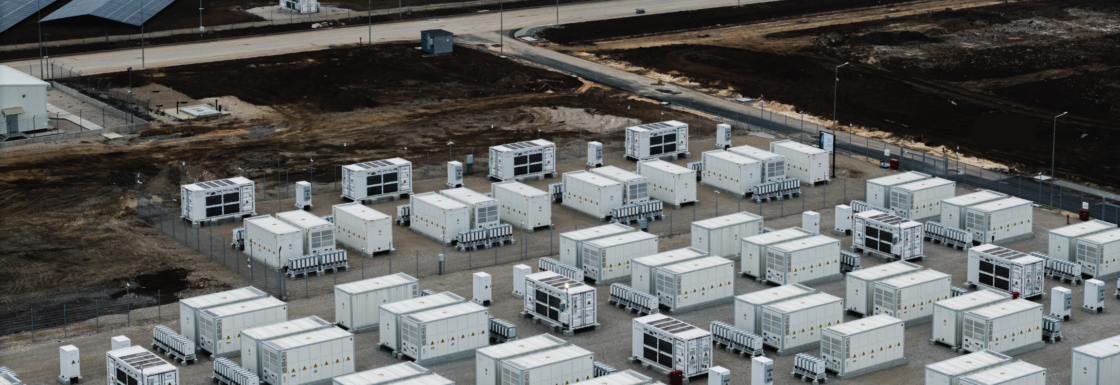

When it comes to grid-scale battery storage capacity, Canada seems to be all talk and no game, especially if you’re looking at Prime Minister Carney’s list of Projects in the National Interest (overwhelmingly omitting renewables, let alone battery storage).
Canada currently ranks 20th in global adoption of battery storage, according to the Canadian Climate Institute. A ranking that isn’t just awkward for a country with an abundance of renewable energy resources and capabilities, but a fact that is in dire need of reversal.
This is perhaps not terribly surprising, as the fossil fuel industry has made batteries a target of its talking points for over a decade. Battery dissenters repeat ad infinitum the tropes that batteries are “unreliable”, “lead to range anxiety”, “don’t work in winter”, “fail after a short use cycle”, “what about all the problems with used batteries,” and… the list goes on.
This past January, in a live interview on CBC News Channel, an individual who previously led marketing for COSIA (the Canadian Oil Sands Industry Alliance) and who now makes public appearances as an independent distinguished fellow for one of Canada’s leading think tanks, reinforced the need for pipelines as essential to Canada’s energy security. In his words, this is because “the sun doesn’t always shine, the wind doesn’t always blow, and battery technology is ten years away from being viable”. His CBC interviewer nodded in agreement.
Except the pipeline is years away from completion and battery storage is ready. California, with a total grid capacity 1.7 times the size of Ontario’s and ~55% of all of Canada’s, has proved it. Batteries regularly supply more of the energy on the grid than any other source for much of California’s evening peak demand and have, on average, been deployed much quicker than a pipeline.
Just in case you’re keeping track, you can add battery storage capacity to the list of things China ranks first in the world for; the country has skyrocketed from 2.4 GW (in 2020) to 144.1 GW (in 2025).
In 2025, Canada had nearly reached 1 GW, with deployment projected to reach 12-16 GW by 2035. If reached by 2035, battery storage capacity could more than comfortably support Canada’s most power-hungry city, Toronto’s, projected summer (6,300 MW) and winter (7,000 MW) peak demands.
It looks like this isn’t an all-too-ambitious goal, as provinces, particularly Alberta and Ontario, increasingly adopt energy storage to support renewables and new high-energy consumption infrastructure.
Like two peas in a pod, batteries and renewables bring the best out of each other. With how most Canadians live our day-to-day lives and consume energy, batteries enable around-the-clock use of intermittent renewable resources like solar and wind in ways that would be unimaginable otherwise. On top of this, batteries are becoming key tools for energy affordability. In Ontario, ratepayers could save between $90 million and $175 million annually by introducing batteries (along with other distributed energy resources) to their lives (calculation based on a 20-year estimation of energy cost savings published by Clean Energy Canada).
This article marks the seventh edition of our Renewables Own the Future series. It lays out Canada’s state of charge on grid-scale energy storage, and while some other methods are mentioned, batteries are our priority in storage discourse. Options like vehicle-to-grid (V2G) and at-home battery storage are key to the broader electrification strategy but not covered in this article.
2022 Clean50 Honouree Matt Harper, Co-Founder & President of Invinity Energy Systems, and 2023 Honouree James Larsen, CEO of e-Zinc, a Toronto-based developer of zinc-air energy storage, were significant contributors to this article and provided valuable insights to the world of battery energy storage in Canada as it is today.
Wondering what it takes to develop renewables in Canada? See Part I – Introduction to the series here; Part II – Onshore Wind here; Part III – Offshore Wind here; Part IV – Ground-Mounted Solar here; Part V – Rooftop Solar here; Part VI – Tidal Energy here; Part VII Battery Storage is below.
What Watt is which
First, let’s start by explaining how battery storage is measured and what watts are. There are two key things we are measuring: power and energy. Power, measured in W, kW, MW, GW or TW, is the rate at which energy flows: how fast a battery can charge or discharge at any given moment. Energy, measured in kWh, MWh, GWh or TWh, is the amount stored or delivered over time (power × hours). A battery has both ratings, and dividing one by the other gives its duration: a 100 MW / 400 MWh battery can run flat-out for four hours. Keep that ratio in mind as it matters a great deal later in this article.
Other units like amps measure current, the speed of the flow of electricity and volts measure the pressure that pushes the current forward. Water is often used as an analogy to better understand electrical energy; see the diagram below.
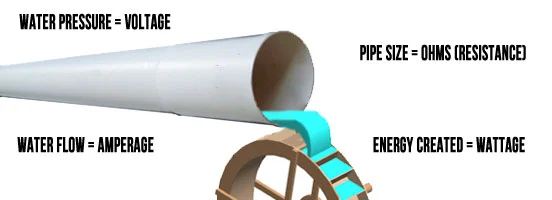
When it comes to batteries, the maximum potential output of all individual batteries connected to the array is their power capacity; the electricity output can be predicted but would need to consider consumption habits and charge and discharge expectations.
If we’re looking at non-electrical battery storage, the stored energy can be measured as heat (thermal energy storage) or potential (flywheels, compressed air, pumped hydro).
Looking to understand more of what it takes to power a house? Check out this explainer.
What counts as energy storage?
Energy storage is any technology or method that can store energy from one time to be used at another. There are five primary types of energy storage used in Canada beyond batteries, all with varying round-trip efficiencies (RTE) (the percentage of electricity recovered from a storage system after a charge and discharge cycle):
Water or air is heated or cooled during off-peak times or times of excess electricity and stored. The stored thermal energy can then be used for production, residential purposes or operational needs of other systems, like improving heat pump efficiency. This is more of an on-site storage system, not grid-scale. Thermal energy storage has an RTE of 90-95% if the electricity used to generate heat remains as heat. If it is then turned back into electricity, its RTE can be 50%.
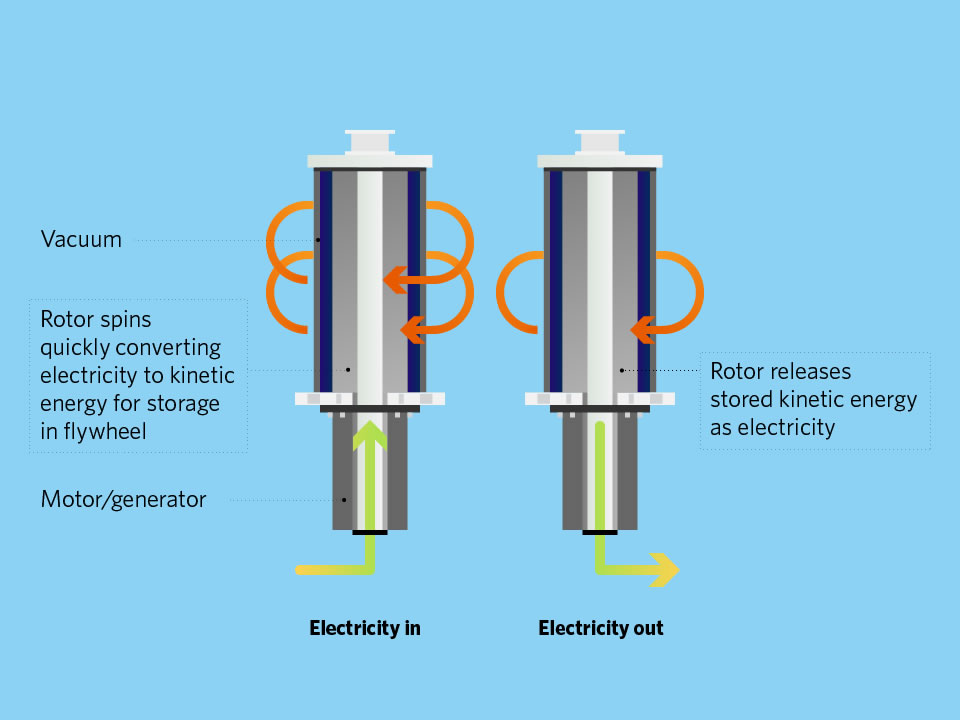
Heavy mechanical wheels store energy by being wound up to spin in a vacuum in a cabinet; winding up to charge and, when needed, the inertia is captured to generate power as it slows down to discharge. These wheels act like turbines and are full of potential rotational energy ready for transformation into electricity. This is preferred for short-term energy needs and consumption balancing. This technology has an average RTE of 85-90%.
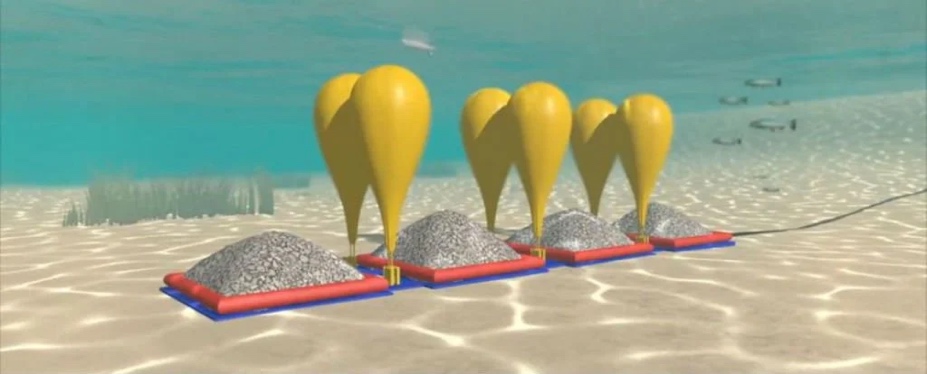
Here, air is compressed into a high-pressure tank with excess electricity or during off-peak times and then released through a turbine when needed. For compressed air, one can expect a 65% RTE– on the high end. You may remember the high-profile compressed air energy storage project in the news by Hydrostor: giant underwater balloons that were set for the depths of Lake Ontario (pictured below).
Proposed compressed air storage project in Lake Ontario
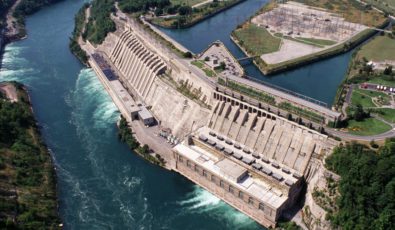
One of the most popular and well-known energy storage methods is pumped hydro. The idea works similarly to the Annapolis Tidal Generating Station in Nova Scotia discussed in last week’s Tidal Energy article. In this case, the process needs two water reservoirs, one at a lower elevation than the other. When there is excess electricity, the water is pumped up to the higher reservoir, and when necessary, it is discharged down a narrow passage through a turbine. This method, like regular hydroelectricity generation, comes with elevated environmental risks, limiting its scalability. Pumped hydro plants have a typical RTE of 70-80%.
Canada isn’t new to this, with its first pumped hydro generating station coming online in Niagara Falls in 1950.
Sir Adam Beck hydro generating station
Recently, hydrogen has grown in prominence. The resource is categorized by different colours to determine its origin. This Clean50 article lays out each colour of hydrogen and what they mean. For energy storage, particularly when paired with renewables, hydrogen turns green (not literally, just in name). Electrolysis is needed to produce hydrogen; this is where surplus electricity splits water into 2 hydrogen molecules and 1 oxygen molecule. Once split, hydrogen gas is stored and used as fuel. Importantly, hydrogen is only green if it uses electricity from renewable resources; if its energy surplus is from, say, nuclear, it becomes pink. When Hydrogen is used as energy storage, its RTE is quite low, ranging between 18 and 46%; efficiency losses are felt most during storage and transport.
Each of these five energy storage technologies has its own ideal operating conditions. Not all are suited to grid support or frequent, high-volume discharge. Of these five, pumped hydro and flywheels are the most efficient forms of energy storage, the former better suited for grid-scale than the latter. Of the overall list, battery storage has grown fastest in prominence by far.
The different types of batteries
Li-ion
Lithium-Ion batteries are the most common, well-known and talked-about. They come in different sizes for different needs, anything from phones to laptops, e-bikes, EV’s, or data centres. The cost to manufacture lithium-ion batteries has dropped dramatically, thanks again to China’s surge in manufacturing and adoption of the technology.
Cost decrease of lithium-ion batteries
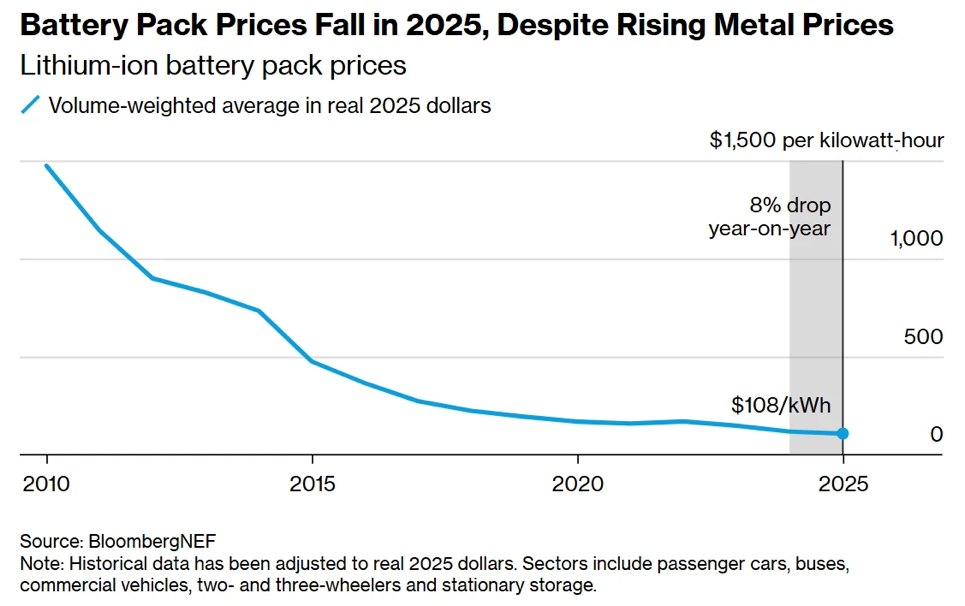
Most recently, “economics have driven more battery development in combination with solar and wind to get the most from the resources and to manage peak loads,” said Matt Harper, President and Co-Founder of Invinity Energy Systems, a vanadium flow battery innovator and manufacturer. It is difficult to overestimate the dramatic impact that the cost decline in batteries has had on the industry and the broader renewables industry.
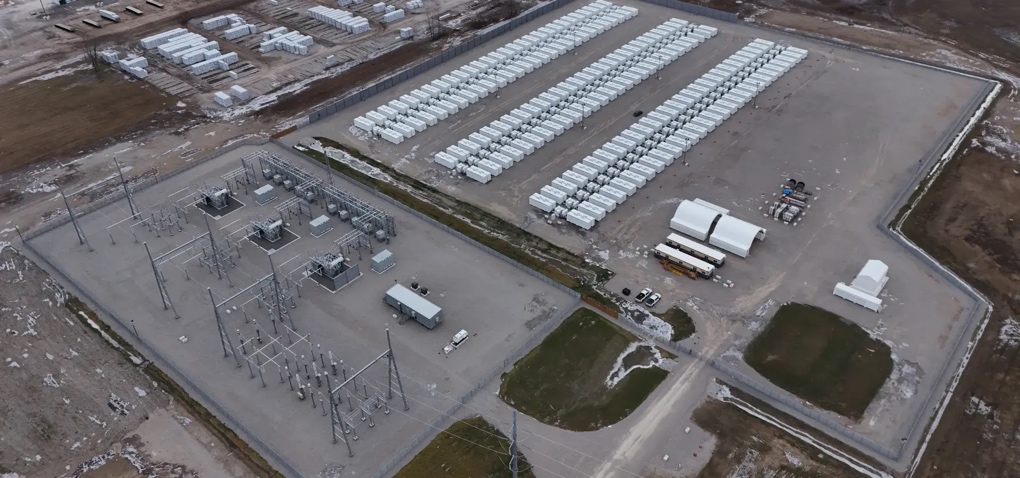
At grid scale, lithium-ion batteries have a typical power discharge duration of 2-4 hours (at peak power) with a 90-95% RTE. Canada’s largest operating grid-scale lithium-ion battery storage project is made up of 278 batteries on 10 acres of Haldimand County, Ontario and has a 4-hour discharge duration. Each battery unit weighs an astonishing 84,000 lbs; that’s about the weight of 9 elephants!
Alone, the park could hold enough electricity to support the monthly MWh needs of 2,775-11,100 Canadian homes (based on 11.1 MWh/year/house). This range is dependent upon actual electricity storage that will change based on demand. The project has resulted in the technology’s most significant impact: it has strengthened grid reliability and system flexibility.
Haldimand County Battery Storage Energy Park
Lithium-ion batteries came on the scene as a solution to many power storage problems, offering faster charging, longer usable life, higher efficiency and lower maintenance than older technologies.
The trouble with lithium-ion batteries
Overall, lithium-ion batteries have become a staple in our lives, a technology that we depend on daily. However, some challenges need to be accounted for when proposing the next lithium-ion battery park.
First, cobalt. Cobalt is a key component in many lithium-ion chemistries, particularly those used in phones, laptops, and many EVs. With demand for rechargeability growing, so has pressure on vulnerable supply chains and unsafe working conditions for those who extract it. Most of the world’s cobalt comes from the Democratic Republic of Congo. Workers are sometimes exposed to inhumane conditions, including overwork, underpay, and physical and chemical risks. This article by National Geographic discusses the details of the dangers of cobalt mining in more depth.
International reactions to the dangers of cobalt mining have resulted in battery manufacturers reducing or eliminating the use of the material in their products. As the industry grows, concern over human impacts of cobalt continues, especially as demand for batteries is set to quadruple by 2030.
According to James Larsen, CEO of e-Zinc:
“It is worth noting that most grid-scale lithium-ion batteries now use lithium iron phosphate (LFP) chemistry, which contains no cobalt or nickel. The cobalt concern applies mainly to EVs and consumer electronics. For grid storage, the bigger exposure is supply-chain concentration: China dominates lithium refining and LFP cell manufacturing”.
Second, the charge. As you may have experienced a few times in your laptop/smartphone owning life, lithium batteries start to lose their hold on charge after a while. Typically, grid-scale batteries have an operational lifespan of 8-15 years before they degrade to 80-70% of operational capacity and require replacement. This is an improvement on older battery technology like lead-acid batteries and the batteries are still functional, just not efficient enough for large-scale projects.
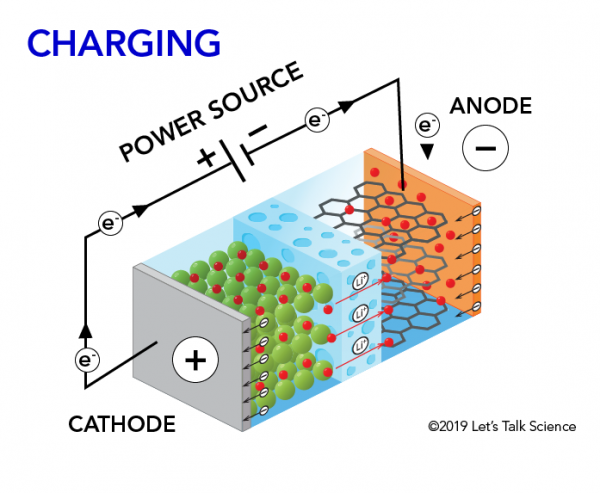
Third, fire. While this has not become a common issue for grid-scale or even EV batteries, the risk exists; recent news of home battery fires has increased concern across the battery board. Lithium battery fires happen because of thermal runaway, where there is a buildup of heat that leads to the release of gases. Batteries are most at risk of thermal runaway if they are messed with (pressure, impact, etc.) or if they are improperly charged. “The LFP (lithium iron phosphate) chemistry now standard in grid storage is considerably less prone to thermal runaway than the nickel-based chemistries found in many consumer devices and e-bikes,” per Larsen.
According to Harper, fire is the most cited concern by community members when proposing a large-scale battery project nearby. For the most part, policy has caught up to this concern, as there are typically restrictions on where lithium batteries can be placed and how proximate they can be to residences.
Fires from EVs and energy storage represent a small percentage of battery fires; these batteries are rigorously tested and have built-in safety features. While it is uncommon, battery fires from energy storage can and have happened; most recently, PEI experienced an almost month-long battery blaze caused by thermal runaway in its Summerside solar farm lithium-ion storage. Proper resources, awareness and training would have likely reduced the extent of the disaster. So, if Canada is going to continue to grow its lithium-ion storage capacity, fire contingency plans will need to improve. While the risk is small, the potential harm is great.
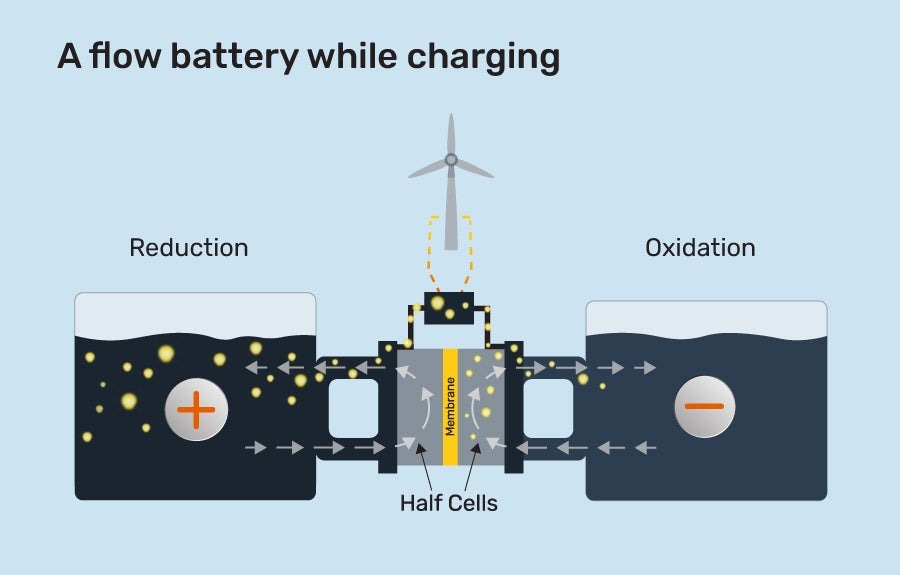
Flow battery
While not necessarily newer than lithium-ion, recent technological breakthroughs have made flow batteries cheaper, safer and suitable for grid-scale storage. Flow batteries can discharge for 6-10 hours, according to Harper. His vanadium (a type of metal most often used in steel manufacturing) flow batteries “don’t degrade with cycle life and benefit from a very high throughput where cycling happens multiple times a day”.
The typical RTE of vanadium flow batteries is 85%, making them slightly less efficient than lithium-ion.
Flow battery projects are typically more expensive than lithium-ion, not necessarily because of the batteries themselves but because of the increased maintenance and other infrastructure needed to support them. They are also less common, which, too, impacts cost.
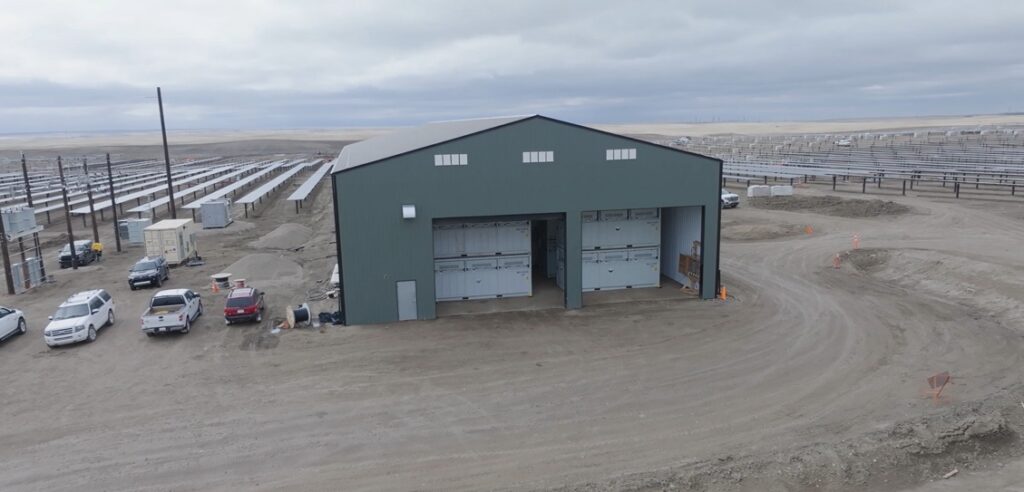
Canada’s largest flow battery project is near Medicine Hat, Alberta. The Chappice Lake Solar Storage Project is a solar & storage combined facility with 8.4MWh of storage and 21MW of solar power capacity. Each battery weighs about 54,200 lbs, a humble 6 elephants. On a full charge, the batteries alone could cover the daily electricity use of 275 Canadian homes.
As pictured below, batteries (both lithium and flow) require a small footprint for a lot of power. The Chappice Lake solar project in total takes up about 160 acres, while flow batteries would take up about 0.2 acres to match the same 21MW capacity (based on the combined size of 38 batteries). This comparison is unfair as solar generation and battery storage are two different technologies doing two different things, like comparing apples to oranges. However, it does show how energy-dense the battery technology is, subsiding concerns of space for development.
Invinity Energy Systems Vanadium Flow Batteries
Flow battery projects also benefit from more flexibility in temperature control. Temperatures in Medicine Hat can reach -45ºC, and flow batteries require fewer interventions than lithium to protect the technology from physical damage related to the cold.
Another significant benefit of flow batteries is their safety. Flow batteries do not contain flammable materials, making them suitable for projects that are in closer proximity to populations and carry less risk of community opposition, according to Harper.
Going longer: zinc-air and long-duration storage
Most of the batteries on Canada’s grid today are built to discharge for two to four hours, which is ideal for shifting solar power into the evening peak. But Canada’s grids peak in winter, and a cold snap can last days, not hours.
“Four-hour batteries solved the evening peak. Canada’s harder problem is the polar vortex: three or four days of extreme cold, low wind and short daylight,” said James Larsen, CEO of e-Zinc. “That calls for storage measured in days, not hours, and it needs to be economic at that duration.”
This is the job of long-duration energy storage (LDES), generally defined as systems that can discharge for eight hours or more. Alongside flow batteries, compressed air and pumped hydro, a newer class of metal-air batteries is emerging, including zinc-air systems designed and manufactured in Ontario.
“Adding hours to a lithium-ion battery means buying more cells,” Larsen explained. “With zinc-air, more hours mostly means more electrolyte, the cheapest part of the system. That’s why the economics improve the longer you go.”
Zinc-air also addresses two of the concerns raised earlier in this article:
“Our chemistry is water-based and non-flammable. It can’t go into thermal runaway, which changes the conversation with fire chiefs and with the communities who live next to these sites,” said Larsen. “And zinc is one of the most abundant and most-recycled metals on earth, and Canada mines and refines it. That means a North American supply chain, with no cobalt and no lithium.”
“We design and build our systems in Ontario, and our first 24-hour system is going into service in Ontario,” Larsen said. “That’s precisely the kind of duration Canadian grids will need.”
Sodium-ion battery
Sodium-ion batteries are up and coming on the large-scale battery storage scene. Instead of lithium, these batteries use salt, an abundant and easily accessible mineral, especially when manufacturing is proximate to seawater. The technology is looking to disrupt the EV industry, offering faster charge-back times of 11 minutes. While not yet on the market, these sodium-ion batteries offer a range of 1000km and can perform better in colder conditions.
How are these projects developed?
If you have been a loyal reader of the series, for which I thank you, you may have noticed a development pattern that is consistent across the board. Project proposal comes first, then comes permitting, simultaneous testing, project design, community and Indigenous consultation and environmental/human risk mitigation decisions, which overwhelmingly take the longest amount of time. Then, once permitting is completed, construction begins; for renewables, construction is relatively quick. Interconnections and final testing lead the project into commissioning.
Batteries are no different and follow the same basic development steps but can move through the process much faster than all of the large-scale renewable projects we’ve covered in the series. According to Harper, most battery storage projects in Canada are standalone, meaning they are less often directly co-located with renewables, and their development is not necessarily dependent upon other moving parts.
Timeline
Ultimately, the timeline depends on who owns the project.
Developer-owned battery projects can take 2-3 years from concept to commissioning, according to Harper. An example of this could be a large-scale industrial user like a data centre wishing to develop battery storage for their operations on their purchased or leased land.
A battery is especially lucrative for a high-energy consumer as it could reduce or eliminate the need for infrastructure upgrades like building new power lines. When most of the infrastructure exists, and a large energy consumer is already operating, introducing batteries can become an optimization project and could take as little as 6 months to come online.
If developers are working with a utility, the timeline is stretched by increased permitting requirements to 3-5 years. Actual construction time for large projects, regardless of ownership type, is typically 18 months.
Benefits to community
The benefits to communities proximate to these projects are consistent with other renewables projects (see our Onshore Wind article for a more in-depth discussion on community benefits). For standalone projects that require new land for development, developers will enter lease agreements with the existing landowners, sending a cheque annually to individuals, often in rural communities. The broader community will benefit from increased municipal tax revenue.
In terms of employment, the construction period will be the height of local employee count, and since these projects are relatively low maintenance, only a few may stay on to manage the facility.
The future
Canada’s battery storage capacity will need to keep up with its grid, which Matt Harper expects to double by 2040. Broadly, the provinces are all in on battery storage development, yes, even Alberta, which omitted the technology from its 2023 renewables moratorium.
All in all, Canada is lucky to have low electricity rates compared to most of the world, but an increase in demand and infrastructure needs for mass electrification are bound to increase our rates, according to Harper. Batteries allow for grid control, manage loads, reduce energy loss and are likely to become essential in reducing future electricity costs.
Right now, Harper emphasized, the biggest obstacle to battery development in Canada is regulation. “They’re classified as both consumers and generators, so they pay fees both when they draw power and when they supply it. Storage is a distinct class of asset, and the fees for connecting to and using the grid should be structured differently.”
Larsen agreed, pointing to how storage is procured: “Most procurements in Canada are still built around a four-hour product. If we want storage that keeps the lights on through a week-long cold snap, markets have to value duration and reliability, not just megawatts.”
According to a 2023 report by Clean Energy Canada, “With energy storage added, variable renewables have more flexibility to target output during high-cost periods in the electricity market,” regardless of whether the sun is shining or the wind is blowing. The report offers the following comparison of natural gas, solar and wind energy generation when storage is added to solar and wind. LCOE is the Levelized Cost of Electricity; it accounts for the entire lifetime of the asset (capital to build, operating, maintenance and financing costs.
LCOE of renewables + storage Clean Energy Canada
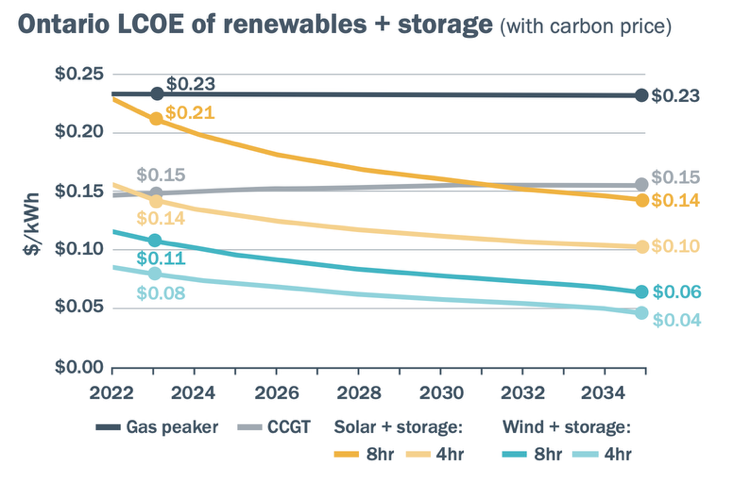
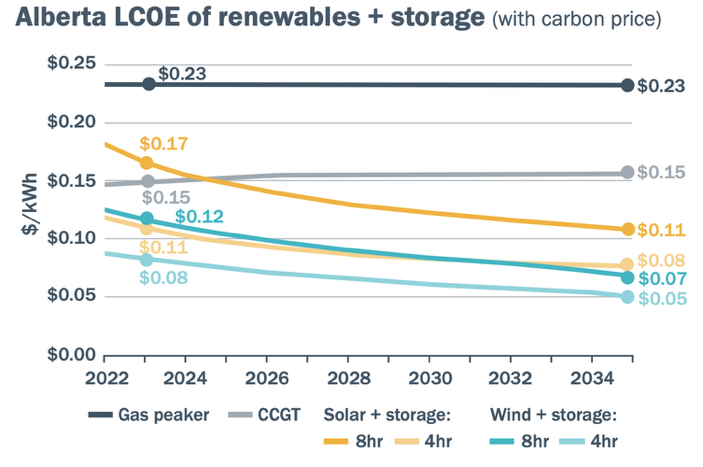
Battery storage is key to a renewable energy future because it improves reliability, lowers costs, and strengthens grid resilience.
Final Words
Regardless of renewable energy adoption, battery storage will need to play a bigger role in Canada’s electrification and growing energy demand.
The next article in our Renewables Own the Future series will be our concluding summary!
A special thank you to Matt Harper, Co-Founder and President of Invinity Energy Systems. His contributions to this article and to broader storage innovations in the energy industry were invaluable. Thank you as well to James Larsen, CEO of e-Zinc, for his insights on long-duration energy storage. Both Harper and Larsen are changing the battery game, right here at home!